
Build a Digital Signage Advertising Network on the screens you own
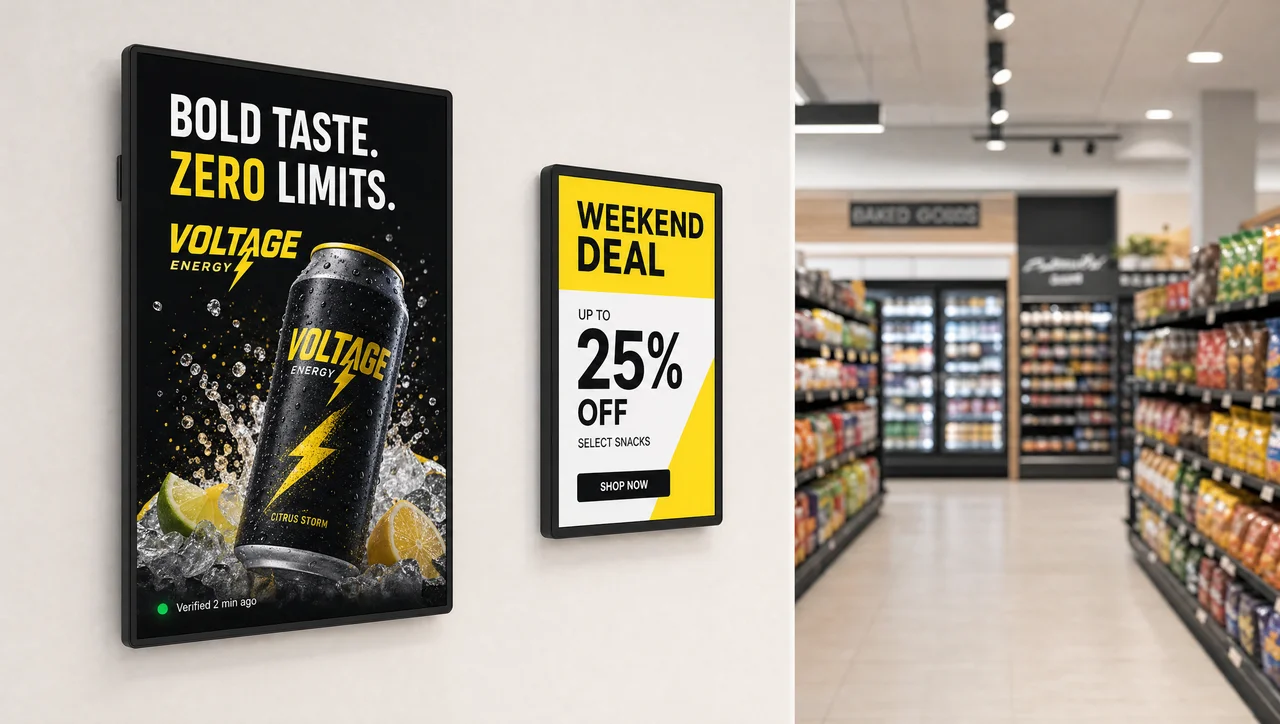
A digital signage advertising network turns the screens a retailer already runs into sellable ad inventory. Decker packages screen time into slots, sells it through direct deals and real-time auctions, and confirms every play at the display itself before it reaches an advertiser’s invoice.
-
Verified play
Confirmed at the display, not in logs Decker Verifier watches the screen independently of the player, so a spot counts only when the display was on and actually showing it.
-
Under 100 ms
Auction on every open slot Unsold seconds go into real-time bidding automatically: no manual booking, no reservation a month ahead, no empty loop.
-
Any CMS
Connects over API to your stack The advertising layer runs on top of the screen platform you already use, or natively inside Decker’s own content management system.
What is a digital signage advertising network?
A digital signage advertising network is a group of screens whose airtime is packaged, priced and sold to outside brands, the same way a publisher sells page space.
Advertising on digital signage covers two jobs that look alike and behave nothing alike. One is promoting your own products on your own screens — that is marketing, and any software for digital signage handles it. The other is running paid campaigns for advertisers who pay per impression.
The second is media, and media needs its own machinery: inventory definitions, rate rules, campaign pacing, playback proof and billing. Decker Advertising is that machinery — each display becomes inventory, each loop position becomes a sellable slot, and each play becomes a billable event.
Networks built around one venue type — stores, transit, gyms, clinics — are called vertical advertising networks, and a retail chain monetising its own floor is exactly that: a single-vertical network with an audience nobody has to guess at.
Your screens are already unsold inventory
Most retail chains buy screens for advertising their own promotions and stop there. Advertising with digital signage stays internal: seasonal offers, own-brand campaigns, service messages. The loop runs sixteen hours a day, the seconds are finite, and the ones nobody fills expire unsold — a network of a few hundred displays quietly produces millions of unclaimed impressions a month. Turning that into revenue needs no new hardware and no new rollout. It needs three things most screen networks do not have yet.
-
One definition of a slot across every location
If each venue counts a spot differently, nothing can be sold as a package. Inventory has to mean the same thing in store 4 and store 247 — same slot length, same plays per loop, same rules — before a buyer can price it.
-
A channel buyers can reach without calling you
Ad time sold through a manager and a signed contract moves at the speed of a media plan. Inventory exposed to demand-side platforms and to your own direct clients moves at the speed of an auction, and fills the gaps a sales team never gets to.
-
Evidence strong enough for an invoice
A delivery report that says content was sent to a player is an assertion. A report that says the display was powered, on the right input and rendering the spot is evidence — and it is what an advertiser pays against without a dispute.


Two demand channels in a digital signage advertising network
Airtime sells through two channels at once, and the mix matters more than either one alone. Direct deals bring predictable revenue from buyers who want specific locations. Programmatic fills what direct sales cannot reach.
-
Direct deals with named buyers
Suppliers, local advertisers and category brands book specific stores, specific dayparts and specific durations at rates you set. You keep the relationship, the pricing and the approval rights. This is where premium placements — entrance, checkout, high-footfall stores — are worth the most.
-
Programmatic auctions
Open slots are exposed to demand-side platforms and sold per impression at market rate. Bidding resolves in well under a second, so the decision of what plays next is made in the gap between two spots rather than in a media plan signed weeks earlier.
-
Your own promotions in the same loop
Your marketing content is not a second-class citizen. It holds a guaranteed share of the loop, and paid demand competes only for what is left over — never for the seconds your own campaigns need.


Fill rate: what happens to the slots nobody buys
Fill rate is the number that decides whether a screen network is a media business or a cost centre: the share of available seconds that carried paid content. Decker treats an unsold slot as a fallback chain rather than a hole. If no direct campaign is scheduled and no bid clears the floor price you set, the slot falls back to your own promotional content, so the screen never shows an empty frame or a stalled loop to a shopper.
⚠️ Switching on programmatic does not make screens pay for themselves. An auction with no bidders returns nothing, and inventory that has never been packaged, priced or measured attracts few bids. Fill rate is built from network size, location quality and audience evidence — the auction only distributes demand that already exists.
Billable impressions: proof of play at the display
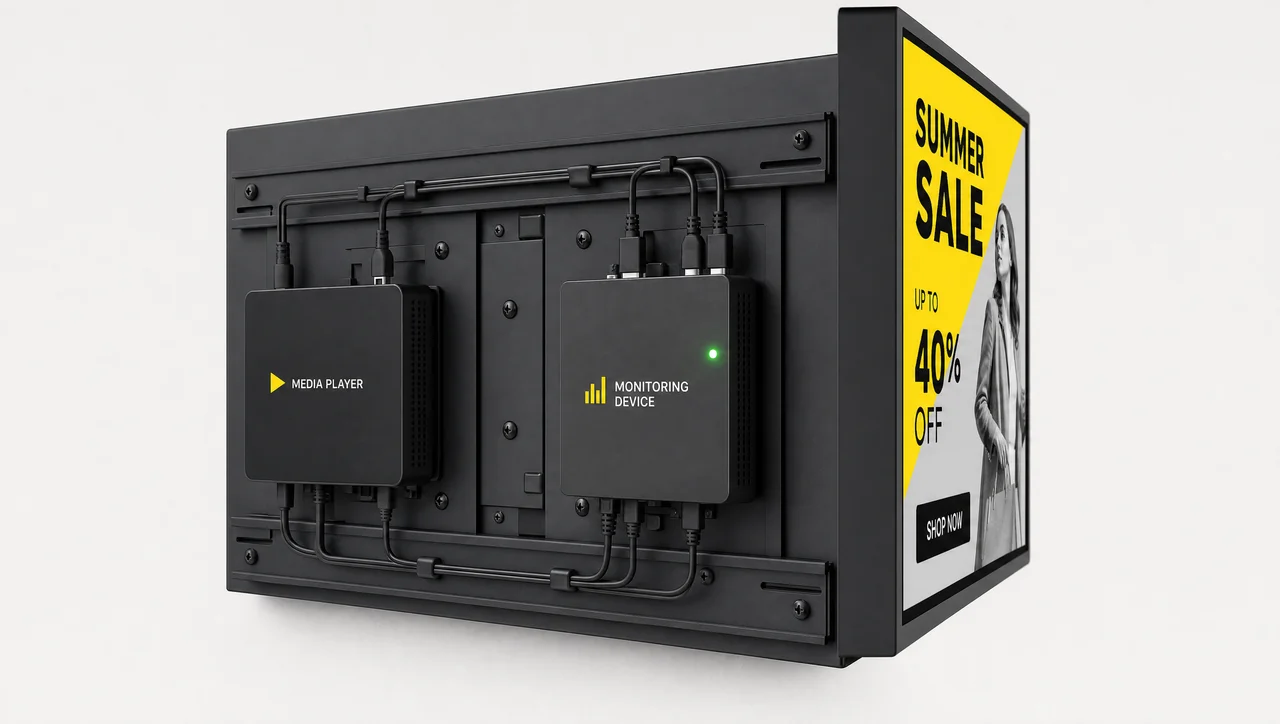
Every advertiser eventually asks the same question, and most signage platforms cannot answer it: did the spot actually appear in front of people? Software-only systems report what was sent to the player. Decker reports what the display showed, because a separate device — Decker Verifier — monitors the screen and the player independently of each other.
| Event | Software-only reporting | Decker reporting |
| Creative delivered to player | Confirmed | Confirmed |
| Player frozen or crashed | Not detected | Detected, player restarted remotely |
| Display powered off | Not detected | Detected, power restored remotely |
| Wrong HDMI input selected | Not detected | Detected, input switched remotely |
| Hours the screen actually displayed content | Not measured | Measured per screen, per day |
That last row is what makes the invoice defensible. Uptime stops being an operational footnote and becomes the basis for billing: a campaign is charged for the plays that happened on a working display, and downtime converts into make-goods instead of disputes.
How advertisers buy your inventory
Buyers do not purchase “your network.” They purchase a slice of it, and the finer the slice you can sell, the more it is worth. Decker exposes inventory along four axes that a media buyer already understands.
-
By store
A single location or a hand-picked set of them. Useful for suppliers testing a product in specific stores and for local advertisers who only care about one catchment area.
-
By region
City, state or a custom cluster of locations. Regional campaigns and seasonal pushes are booked as one line item instead of a spreadsheet of screen IDs.
-
By daypart
Morning, midday, evening, weekend. The same display sells at different rates at different hours, because the audience in front of it is not the same audience.
-
By share of voice
A guaranteed percentage of the loop over a period, rather than a fixed number of plays. This is how sponsorships and category exclusivity are usually sold, and it prices premium placements without capping them.


Audience evidence advertisers ask for
Brands buying indoor digital signage advertising expect the same reporting discipline they get online: how many people, when, and for how long. Without that, inventory sells at the bottom of the rate card no matter how good the locations are.
-
Traffic and exposure
Counts of people passing and pausing in front of a screen, by hour and by location. This is what turns digital signage for advertising into a quantified impression rather than an estimate.
-
Dwell time
How long a viewer stays in range of the screen. Dwell separates a high-impact placement from a corridor screen that people walk past — and justifies charging differently for the two.
-
Audience composition
An optional module reports aggregated audience characteristics for buyers who require demographic guarantees. Reporting is aggregated by location and hour, with no individual identification at any point.
-
Delivery against plan
Impressions delivered versus impressions promised, per campaign and per location, in the same report the advertiser sees.


A branded ad portal for your advertisers
Selling digital signage advertising falls apart on operations long before it falls apart on demand. Every campaign brings a creative file by email, a question about whether it ran, and a manual report at month end. A white-label advertiser portal removes that entire loop: buyers work under your brand, and your team stops being a mailbox.
-
Self-service uploads
Advertisers submit creatives themselves, against format and duration rules you define, so rejected files are caught before they reach a screen.
-
Live campaign visibility
Buyers see delivery as it happens — plays, locations, pacing — instead of waiting for a monthly PDF from your team.
-
Your brand, not a vendor's
The portal carries your identity. To the advertiser, the media network is yours; the platform underneath is invisible.


Ad operations in four steps
Going from a working screen network to a selling one is a configuration project, not an installation project. The screens stay where they are.
-
Step 1.
Define and price the inventor
Group displays into sellable units, set slot length and plays per loop, and set a floor price below which a slot will not be sold. This is the step most networks skip, and the one that determines everything downstream.
-
Step 2.
Connect demand
Open the inventory to programmatic buyers, to your own direct clients, or to both. Direct and programmatic run against the same loop without separate scheduling.
-
Step 3.
Set the rules of the loop
Decide the paid-to-own content ratio, maximum repetition per hour, blocked advertiser categories and which creatives need manual approval before they can appear.
-
Step 4.
Report and invoice
Pull delivery by campaign, location and daypart, backed by confirmed plays, and bill on evidence rather than on schedules.
Ad rules and brand control in store
In-store advertising digital signage carries a risk that outdoor inventory does not: a paid spot appears inside your own brand environment, next to your own prices, in front of your own customers. Control is not a feature here, it is a precondition.
Decker enforces the boundaries before a creative ever reaches a display. Category blocks keep competing brands and unwanted verticals off your screens entirely. Frequency caps stop one advertiser from dominating an hour. Approval workflows hold every creative for review, with a record of who released it. And the guaranteed share of loop reserved for your own content means a paid campaign can never crowd out an operational message — a promotion, a service notice, an opening-hours change.
Digital signage advertising software that runs on your current screens
Decker Advertising is a separate product from the platform that manages your content, and it does not require you to migrate. It connects over API to the system already driving your digital signage advertising screens, or runs natively alongside Decker’s own screen content management system with no additional integration work. Screens, players and mounts stay exactly as installed — wall panels, kiosks, video walls and freestanding digital advertising signage all keep their current configuration. What changes is that the loop now has a commercial layer above it.
When a screen network is not ready to sell advertising
Not every network should monetise, and pretending otherwise wastes a quarter. These are the cases where the answer is no, or not yet:
- The network is too small to attract bids. Programmatic demand is priced on reach. A handful of screens in one venue will draw occasional bids at low rates; the auction does not create demand it cannot find.
- The screens are menu boards with a fully committed loop. If every second of a digital menu board is carrying prices, availability and combos, there are no sellable seconds to release without damaging the thing the screen exists for.
- The screens face staff, not shoppers. Back-of-house dashboards and staff communication displays produce no shopper impressions and cannot be sold as inventory, regardless of how many there are.
- Playback cannot be confirmed. Without hardware-level verification, delivery reports are assertions. Advertisers who buy on impressions will eventually audit, and unverifiable inventory gets discounted or dropped.
- Ad revenue is expected to be the primary income. For a retailer, monetised screen time offsets operating cost and funds the network. Businesses treating it as a main revenue line are building a media company, which is a different plan entirely.
Subscription or revenue share
Digital signage advertising costs are structured two ways, and the right one depends on how confident you are in demand. A per-screen subscription keeps the platform cost fixed and predictable, and every dollar the inventory earns above that stays with you — the better the network performs, the better this model looks. Revenue share moves the risk to the platform: there is no fixed cost per screen, and the platform earns a percentage of what the inventory actually generates, which suits networks that are still proving demand.
Current plans and inclusions are listed on the pricing page, and a network-specific calculation is available through a quote request.
See what your digital signage advertising network could earn
Book a walkthrough with your own screen count and locations, and see how your inventory would be packaged, priced and sold before you commit to anything.
Where this inventory sits
Vertical advertising networks are priced on how well the venue explains the audience. These are the retail formats where Decker screens already run, and each one carries a different rate for the same fifteen seconds.
-
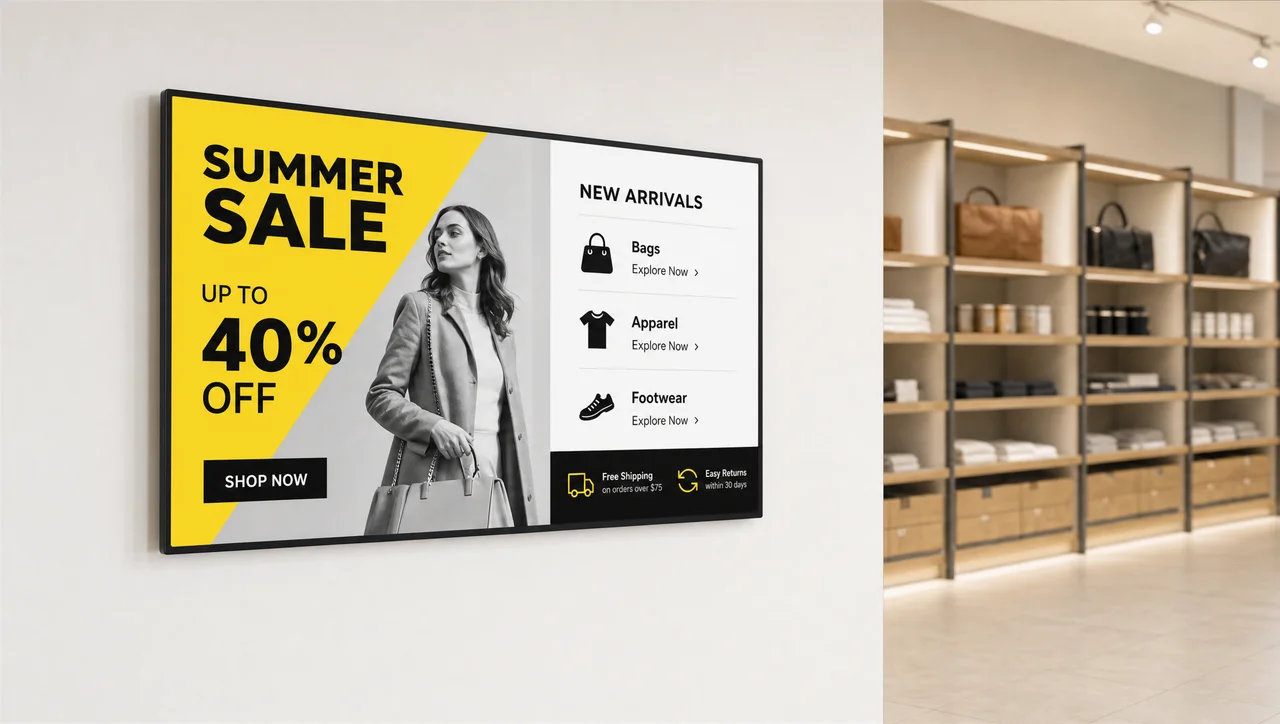
Retail
Promotions and brand content in non-food stores.
-
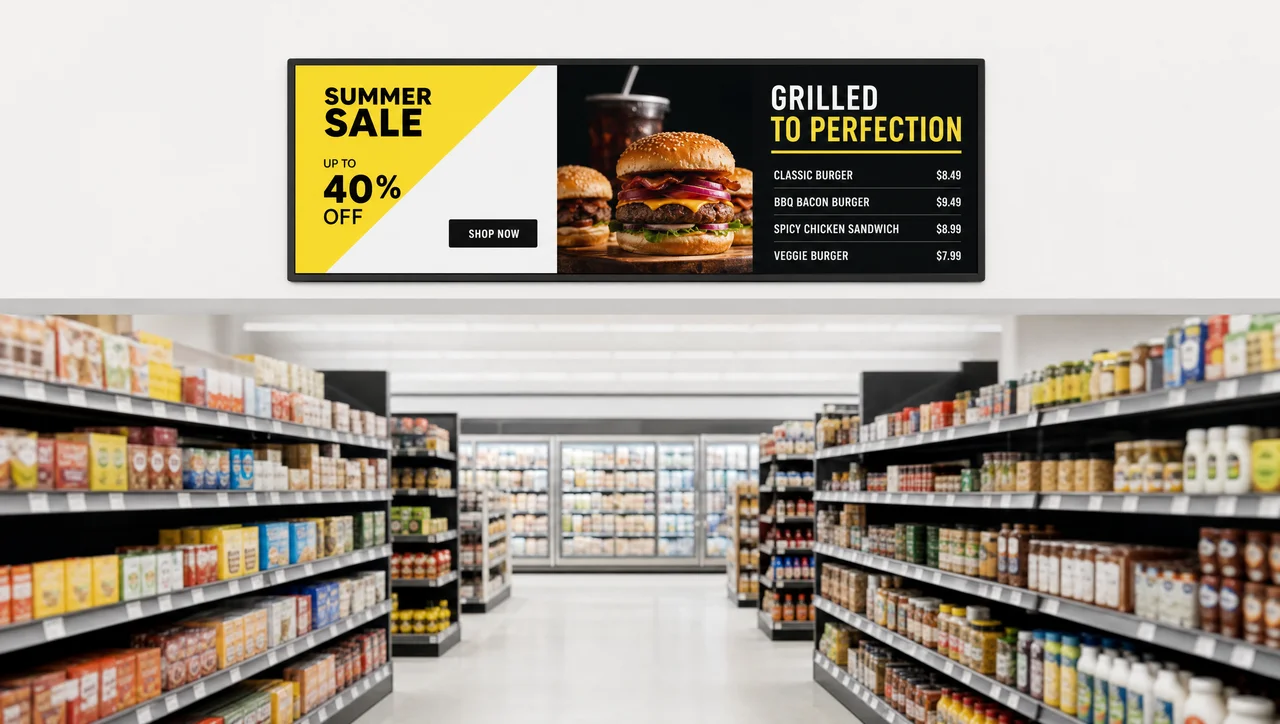
Grocery & supermarket
Department and promotional screens across the shop floor.
-
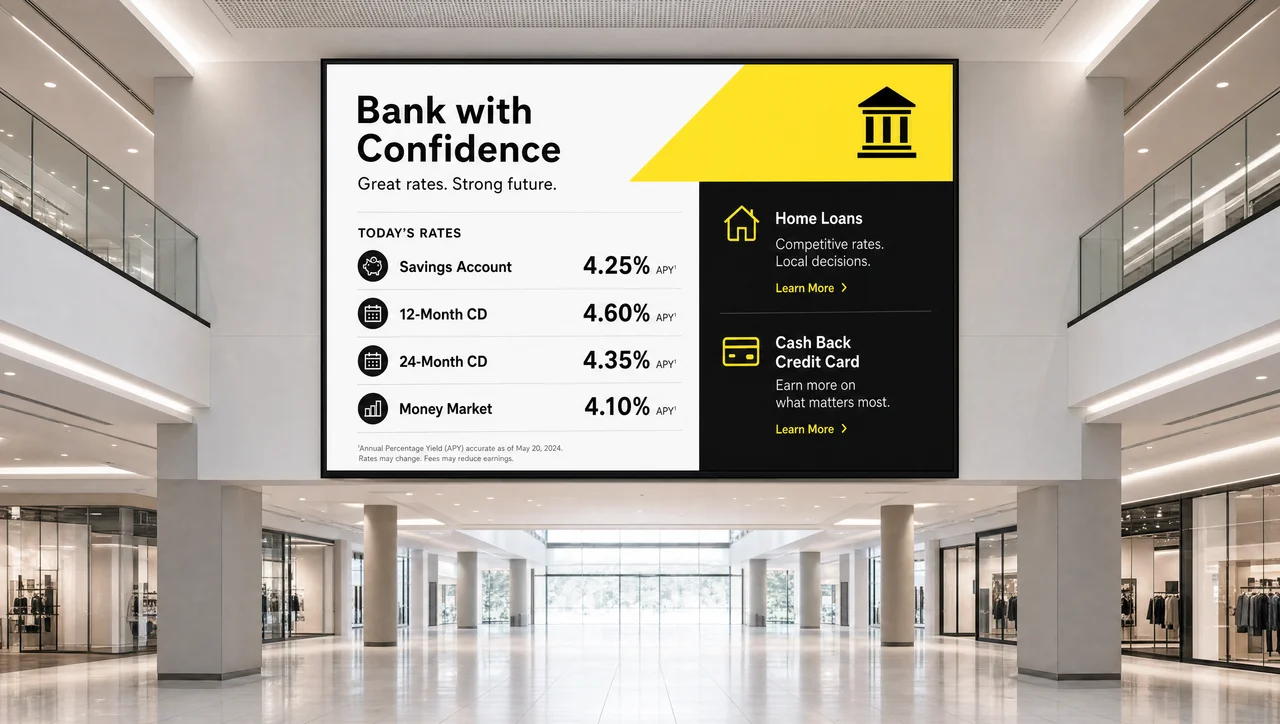
Shopping malls
Common-area screens carrying navigation and promotion together.
-

Fashion retail
Window displays and lookbook content in apparel stores.
-
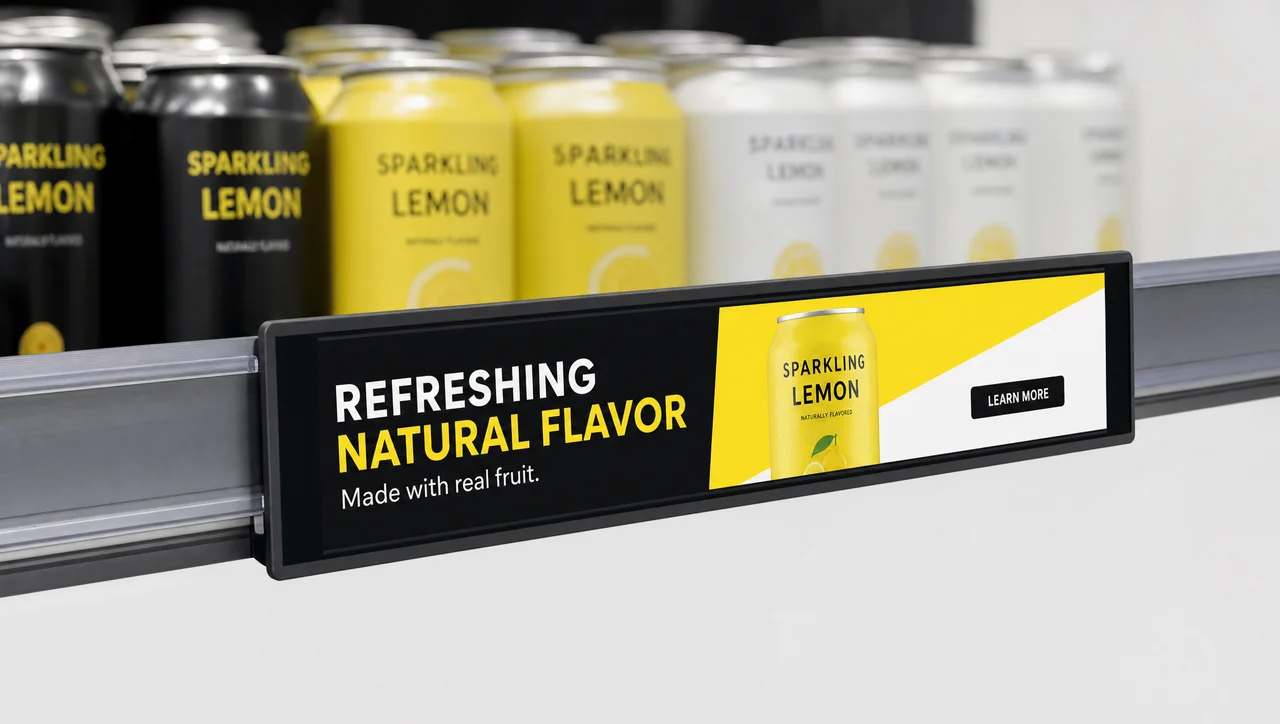
Shelf-edge screens
Narrow displays at the point of product decision.
-
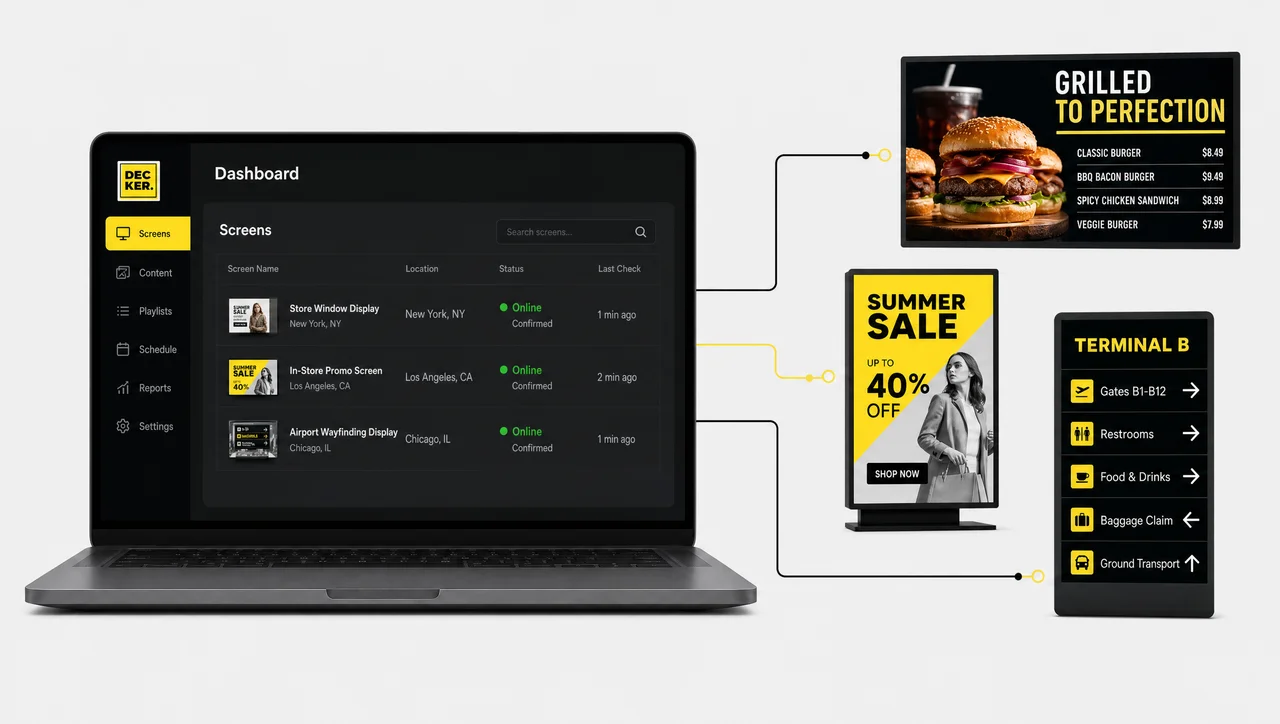
Screen management system
The operational layer that publishes and monitors content.
Trusted by
- 13,700+
- screens connected to the platform
- 490+
- retail locations running on Decker
- 90+
- cities with active deployments
- 7+ years
- building screen networks that stay online
Digital signage advertising network FAQ
What is a digital signage advertising network?
A digital signage advertising network is a set of screens run as sellable media rather than as a broadcast channel: inventory is defined, buyers reach it through direct deals or auctions, plays are confirmed, and delivery is reported for billing. Digital signage advertising software is what supplies that machinery on top of screens that already work.
Do I have to replace my current signage platform?
No. The advertising layer connects over API to the system already running your screens. Replacing it is an option, not a requirement.
Who brings the advertisers?
Both sides. Programmatic connections expose your inventory to demand-side platforms and the agencies buying through them, without you selling anything directly. Direct deals stay yours: your clients, your rates, your approvals. Most networks run both, and the direct side usually carries the premium locations.
What happens to slots nobody buys?
They fall back to your own promotional content. An unsold slot never shows a blank frame, and the loop keeps running at full length regardless of demand.
How does a play become a line on an invoice?
The Verifier device confirms that the display was powered, on the correct input, and rendering content at the moment the spot ran. Confirmed plays aggregate into delivery reports by campaign, location and daypart, and those reports are what the advertiser is charged against. Plays lost to downtime are excluded and rescheduled.
How many screens do I need before this is worth doing?
Enough to represent a reach a buyer recognises — typically a multi-location chain rather than a single store. Below that, direct local deals are realistic but programmatic demand will be thin. A network review before rollout will tell you which side of that line you are on.
Can my own campaigns and paid ads share the same screen?
Yes, and the split is enforced rather than negotiated. You reserve a guaranteed share of the loop for your own content, and paid demand competes only for the remainder.
Can advertisers buy specific stores rather than the whole network?
Yes. Inventory is sold by individual store, by region, by daypart and by share of voice, which is what makes supplier-funded and regional campaigns possible in the first place.
What audience data is reported?
Traffic counts and dwell time are standard reporting on every campaign. Audience composition is an optional module for buyers who require demographic guarantees, and it reports aggregated figures by location and hour rather than identifying anyone.
How is it priced?
Either a fixed per-screen subscription with all inventory revenue retained by you, or a revenue share with no fixed per-screen cost. Plan details are on the pricing page; a calculation for your specific network is available on request.
Ready to see what your loop is worth?
Book a live walkthrough with your own screen count and locations, and see the inventory, targeting and delivery reports as an advertiser would.


