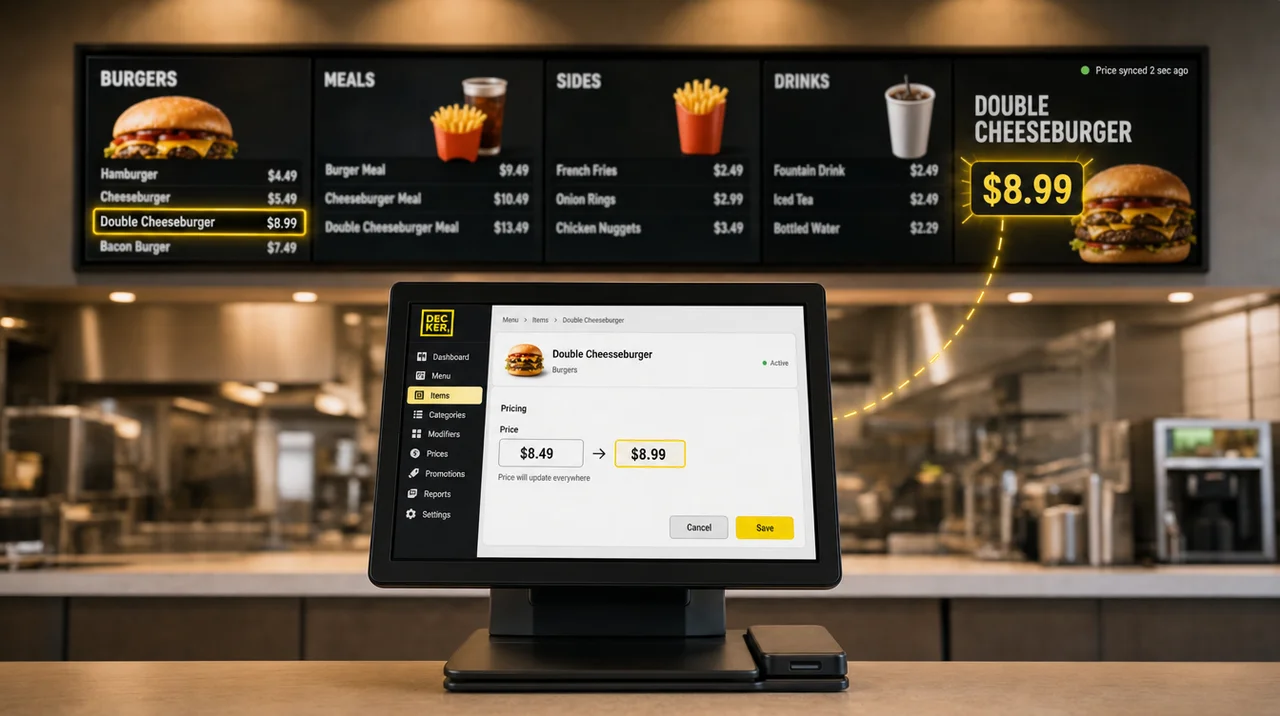
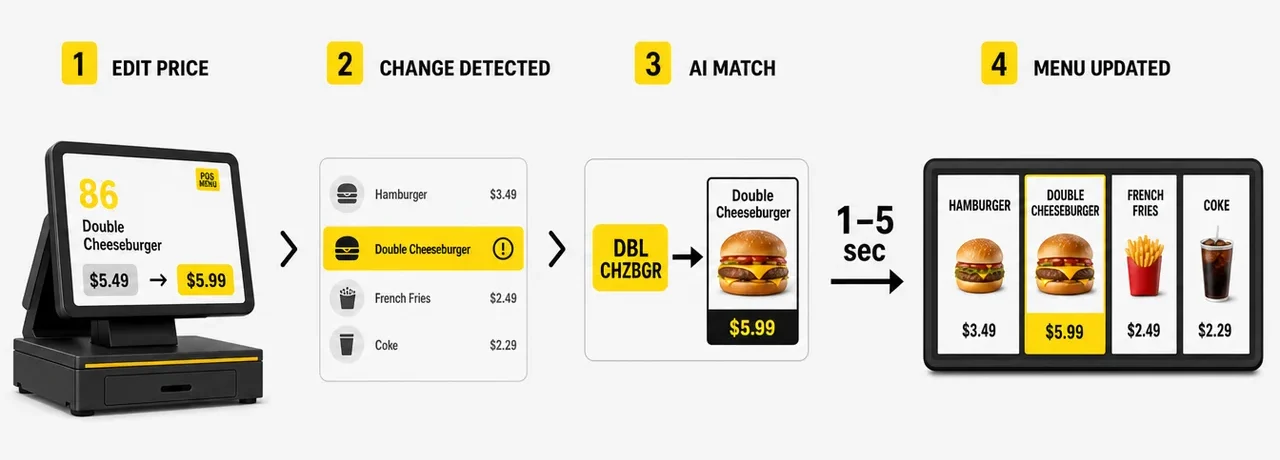
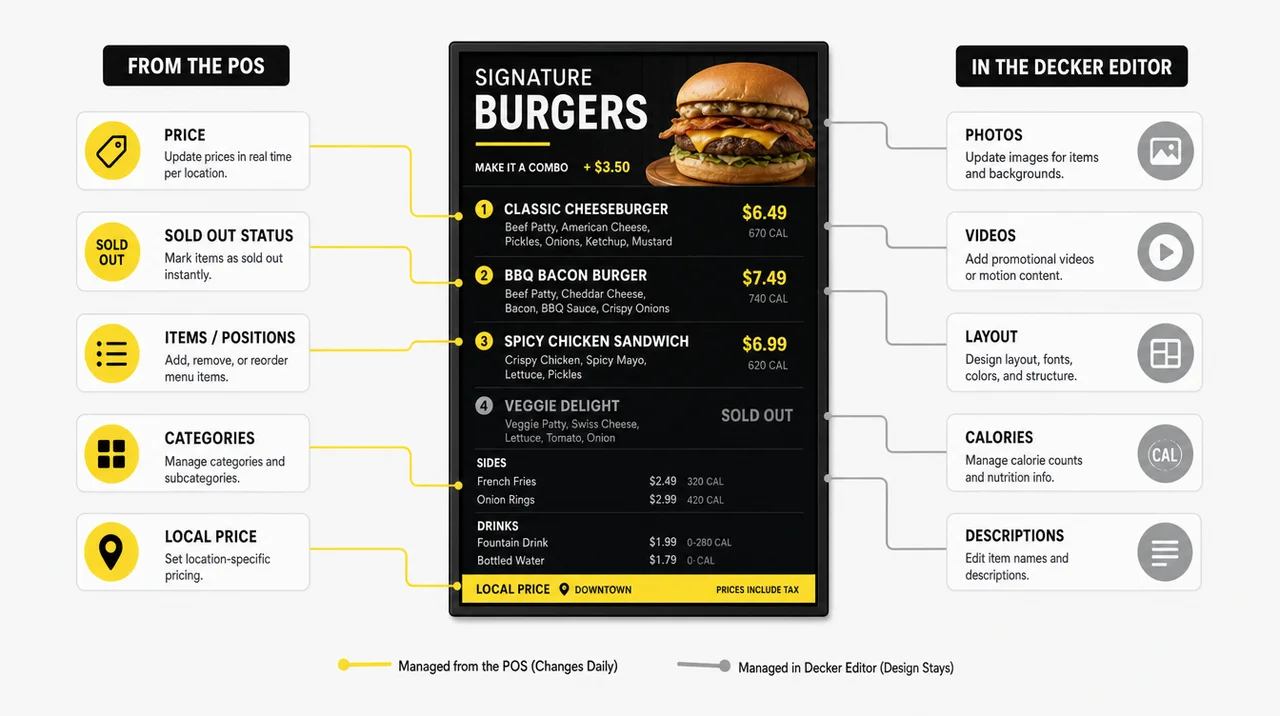
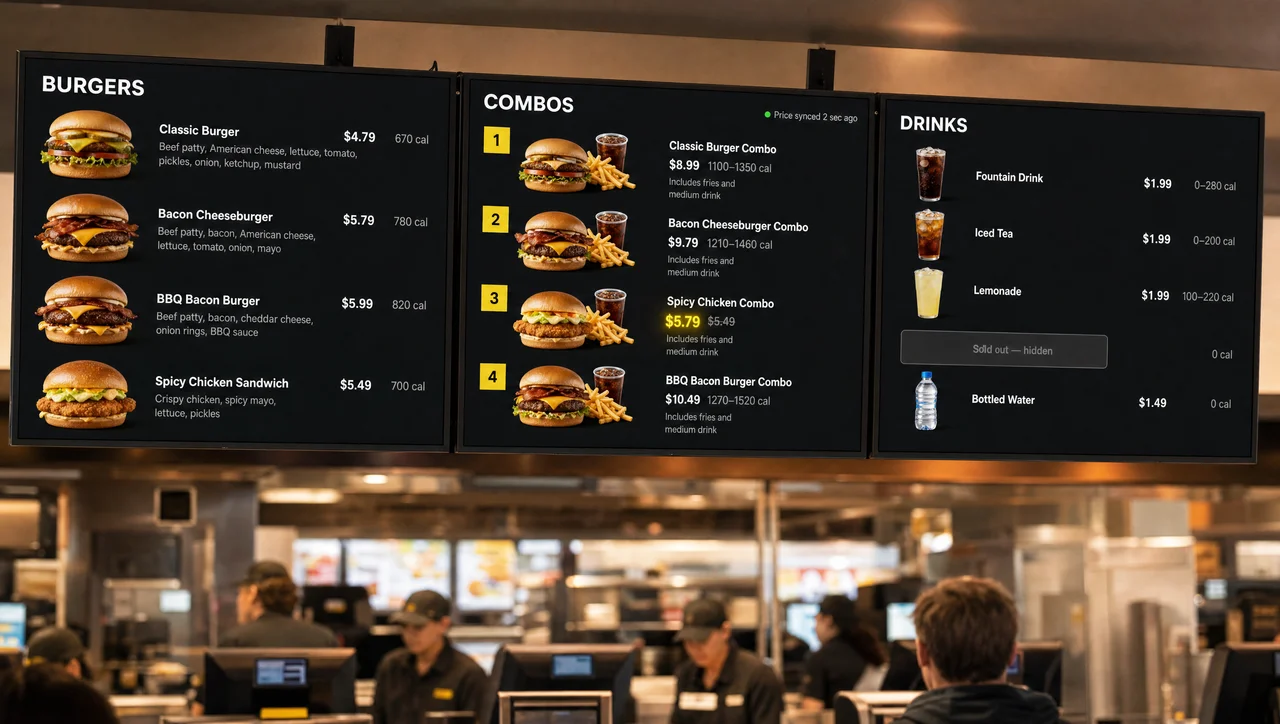
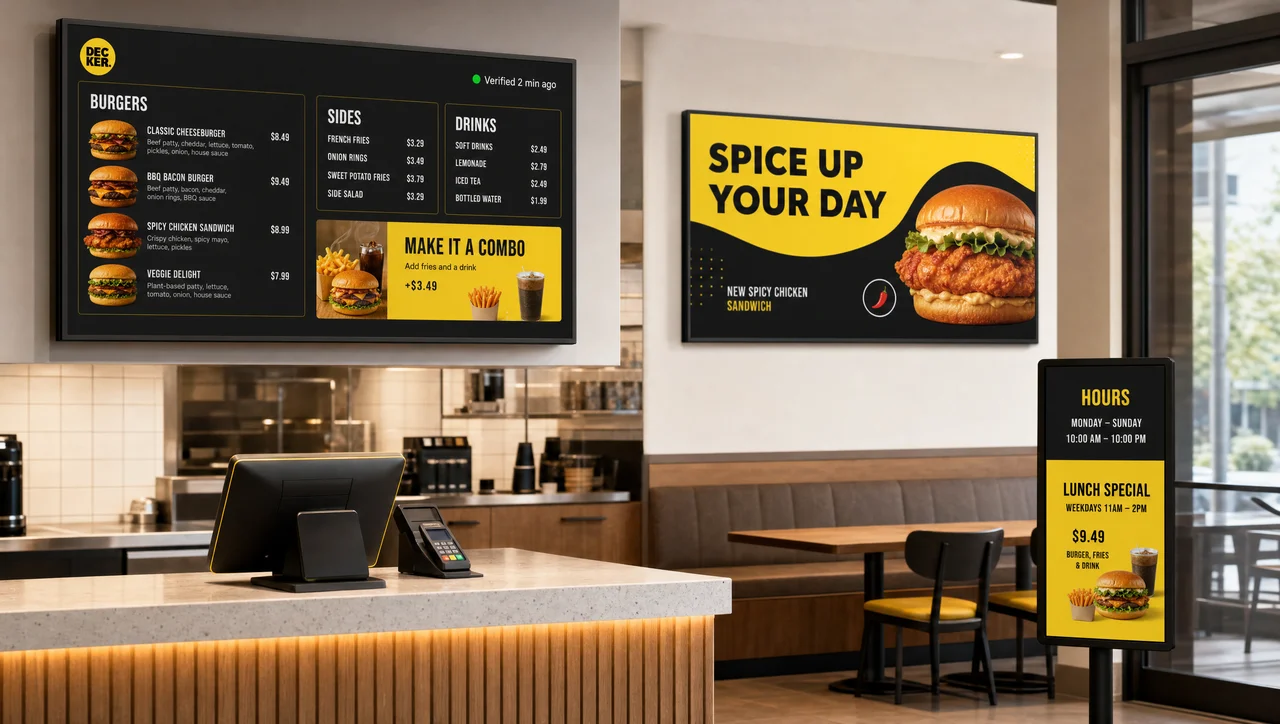
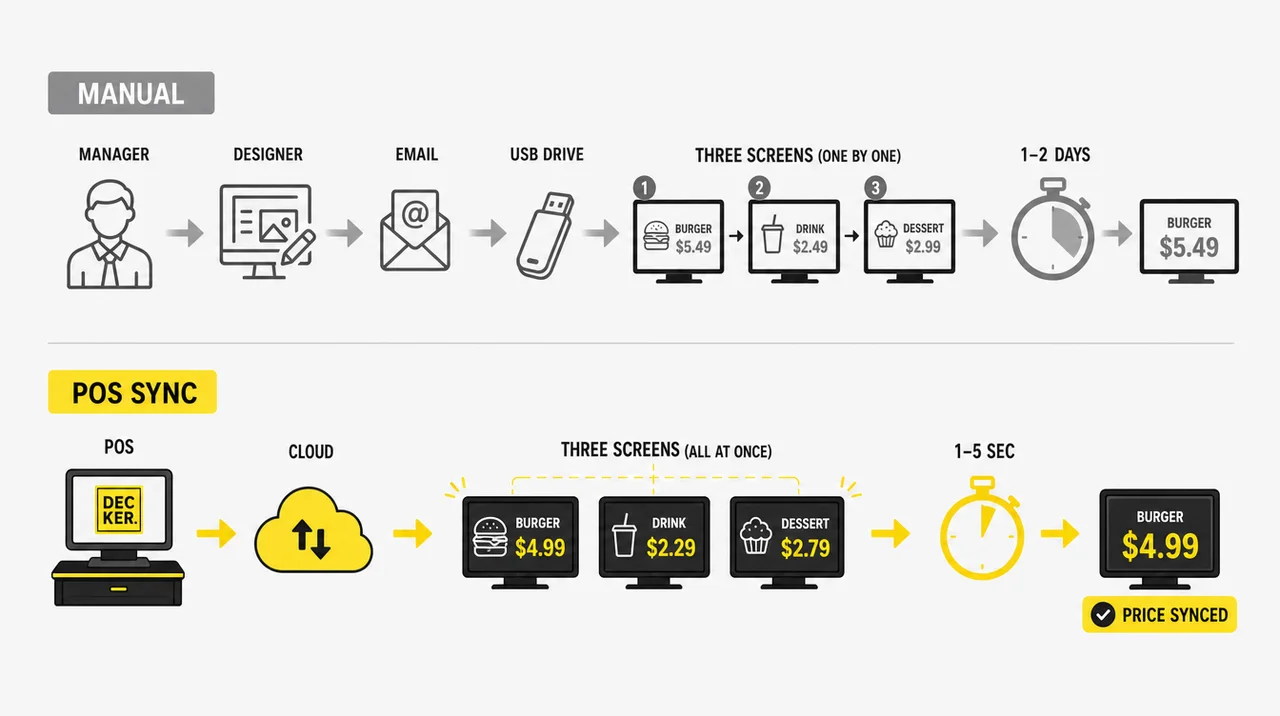
To sync prices to menu boards automatically, Decker makes the POS the only place a price lives, so a menu change takes one edit at the register instead of a designer, an email, and a USB stick. Food away from home prices rose 3.4% in the 12 months to August 2026, and limited-service meals rose 3.2% (BLS), so price edits keep coming.
| One price change |
Manual menu board |
With POS sync |
| Who touches it |
A manager, a designer, and someone at each screen |
The manager, once, in the POS |
| The layout |
The designer reworks and exports the file |
The price swaps in place, fonts intact |
| Delivery |
A USB stick or an upload, screen by screen |
Every connected screen at once |
| Time to screen |
1–2 days |
1–5 seconds |
| Board vs. register |
Can disagree until someone notices |
Both read the same price |
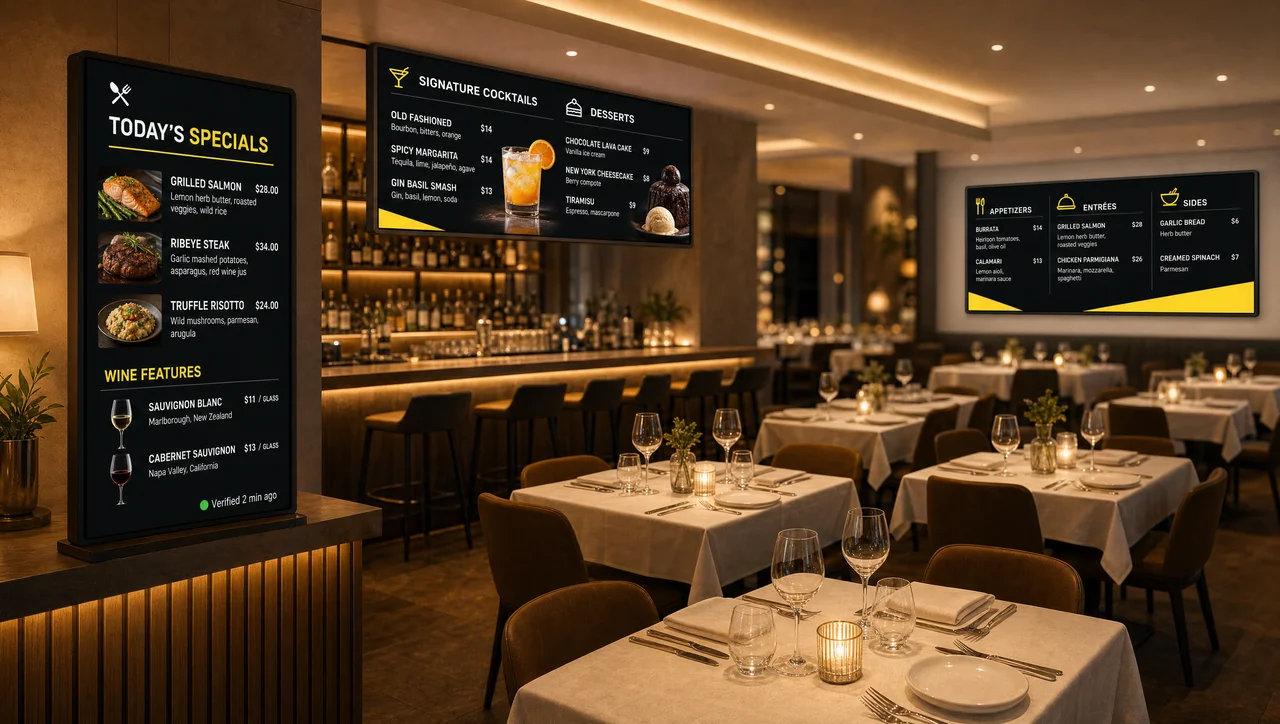
A dynamic menu board goes further than prices: rules swap panels by time of day, stock, or weather, and menu content automation covers those triggers.
Myth: “Every POS-connected menu board updates in real time.” Not always: some integrations pull data on a timer or through a daily export, so a new price can wait hours for the next pull. Ask any digital menu POS integration vendor how often it reads the register.
Next comes the question of where prices come from when your register is not on the usual list.