Ilya Kolmogortsev
Chief Technology Officer & Co-Founder
Digital signage architecture, player and verification hardware, integrations, and technical reliability across menu boards, kiosks, video walls and dashboards.
About the Expert
LinkedIn: https://www.linkedin.com/in/ilya-kolmogortsev/
Ilya Kolmogortsev co-founded Decker and is responsible for the technical development of the platform and for the hardware that runs alongside it. His areas of responsibility include backend and frontend components, integrations with external systems, media player workflows, content delivery to screens, and technical scaling of the service.
He designs solutions that let teams manage screen networks from a single interface, update data through POS, ERP or accounting systems, control publishing, and keep devices working across distributed environments. The playback scenarios differ sharply between them — a menu board rotates a playlist, a wayfinding directory waits for input, a video wall synchronises across panels, a production dashboard redraws from a live feed, and an emergency alert has to override everything on screen within seconds — and each imposes a different requirement on the same platform.
Hardware
Hardware is what separates his work from software-only signage engineering. Ilya designs both the Decker Player and the Decker Verifier — the separate device that confirms what is actually on the display rather than what the player reports about itself.
That distinction creates engineering problems most signage platforms never face. How to confirm what is on the glass when the player that should confirm it has frozen. How to return a panel to the correct HDMI input when the player cannot issue the command, and when deep-standby power modes have switched the display’s CEC receiver off. How to keep reporting screen state when the software stack below has stopped.
In expert content he covers platform architecture, POS and ERP integrations, fault tolerance, APIs, screen monitoring, playback verification, and automatic content updates.
Education
Ilya studied applied informatics, software engineering, and computing systems. His academic background included algorithms, databases, network technologies, parallel computing, software system architecture, and optimisation methods.
He also developed additional expertise in backend development, API design, DevOps practices, containerisation, and monitoring of distributed services.
This background helps him design Decker as one connected environment, where content, schedules, devices, integrations and customer data operate on the same model rather than as separate tools joined by exports.
Professional Experience
Ilya has more than 7 years of experience in software development and technical architecture for technology products. Before developing Decker, he worked on projects related to retail technology, process automation, and software solutions for business — environments where a failure is operational rather than cosmetic.
At Decker he is responsible for the technical foundation of the platform: service architecture, POS and ERP integrations, data update logic, content publishing stability, device firmware, and internal tools for the team.
His work carries a constraint most development does not have. A solution has to hold not on one device but across hundreds of screens in venues nobody visits — restaurants, supermarkets, hotel lobbies, clinics, school campuses, bank branches, airport concourses and factory floors — running different playback scenarios on networks of varying quality. He also maintains the integration documentation, because in his view the limits of an integration are as important to publish as its capabilities.
Editorial role
Ilya’s technical experience is used when preparing Decker knowledge base and blog materials. He helps the editorial team accurately describe product architecture, integration limitations, content update logic, media player workflows, and the requirements for a screen network that stays live.
He is the expert reviewer for materials about technical reliability, hardware, POS and ERP integrations, device monitoring, and playback verification, including the limits — which integrations cannot do, which panels cannot be woken remotely, and what a verification device can and cannot confirm.
Articles by This Expert
-
 Digital Signage Academy
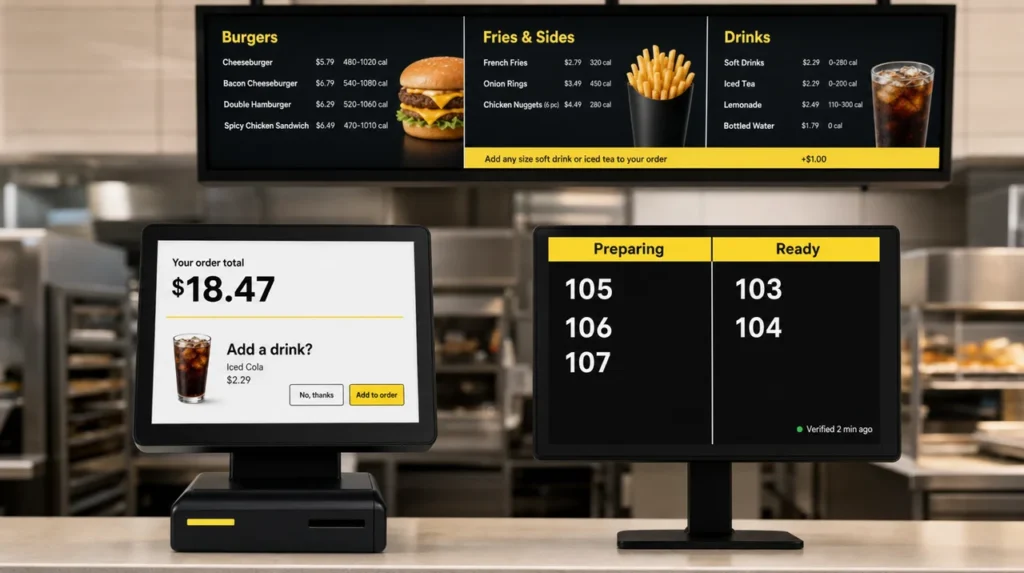
What Is POS Digital Signage? Point of Sale Displays and POS Integration Explained
-
 Digital Signage Academy
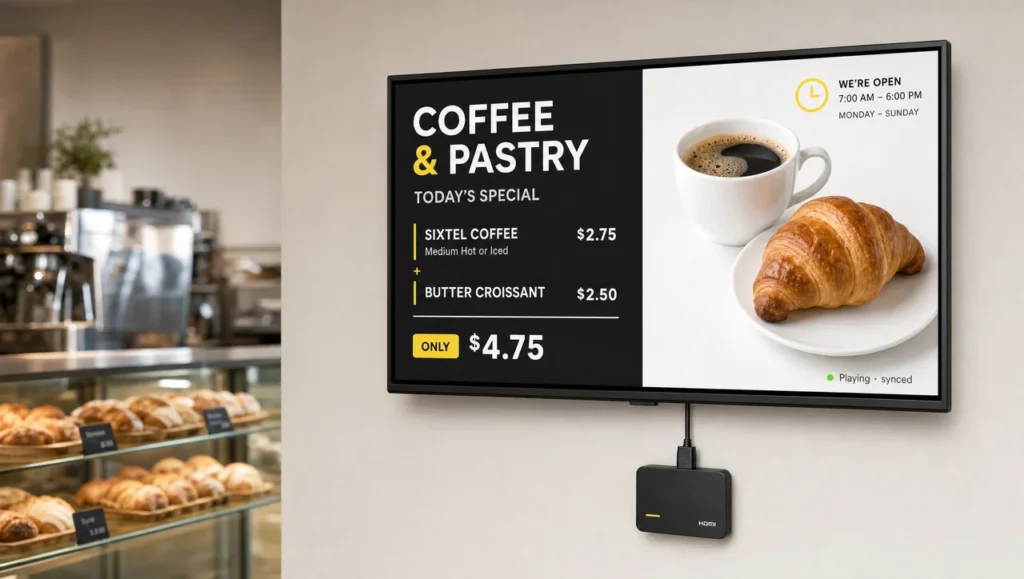
How to Turn a TV Into Digital Signage That Stays On All Day
-
 Digital Signage Academy
Digital Signage vs TV: When You Can Use One as the Other
-
 Digital Signage Academy
Loop Playlists in Digital Signage: How the Repeat Cycle Works
-
 Digital Signage Academy
How to Choose the Right Digital Signage Software: A Buyer’s Checklist for CMS, Playback, and Cost
-
 Digital Signage Academy
Digital Signage Software That Works With Any TV: Platform by Platform