90 Catering Menu Ideas That Work for Your Kitchen and Your Margins



Catering menu ideas work when three things line up: the dish, the service format, and the food cost. Below are 90 ideas sorted by format, time of day, group size, season, and diet, with the portion numbers and cost targets a restaurant kitchen needs to quote them without guessing. Specifically, the list runs from service format down to transport, because each layer narrows the one below it.
Catering Menu Ideas by Service Format
Start with the format, because service formats shape catering menus more than individual dishes do. They decide how much food you send, how many hands you staff on site, and what the order costs to produce. Buffets run a 28–33% food cost, plated dinners 30–38%, cocktail receptions 25–32%, boxed lunches and corporate drops 25–30%, and BBQ spreads 28–34%.
The catering menu ideas below sit in three groups, from the most interactive to the most portable.
Stations and interactive formats: the most elegant catering menu ideas usually start here
- Taco bar with seasoned beef, chicken tinga, tofu, warm tortillas, and salsa verde
- Pasta station with penne and orecchiette, marinara and alfredo, pancetta, and sautéed mushrooms
- Baked potato bar loaded with chili, bacon, chives, sour cream, and sharp cheddar
- Build-your-own salad station with greens, grilled chicken, chickpeas, and tahini or balsamic
- Slider trio: mini sirloin, pulled pork, and buffalo cauliflower
Platters and displays
- Grazing table with aged cheddar, brie, prosciutto, dried figs, and marcona almonds
- Mezze display of hummus, baba ganoush, tabbouleh, and warm pita
- Seafood display with shrimp cocktail, smoked salmon, and oysters on ice
- Family-style platters of roast chicken, garlic mashed potatoes, and glazed carrots
- Carving station with herb-roasted turkey breast or prime rib and pan jus
Individual and passed service
- Boxed lunch: turkey and avocado wrap, kettle chips, fruit cup, cookie
- Passed hors d’oeuvres: bacon-wrapped dates, caprese skewers, coconut shrimp
- Late-night station with street tacos or loaded fries for long evening events
- Dessert bar with mini tarts, brownie bites, and lemon posset in small jars
Sorting catering food ideas by format first saves an argument later. Finger food catering menu ideas (sliders, bruschetta, skewers) and buffet-style spreads do different jobs: stations turn eating into an activity, which works when guests do not know each other. Platters and boxes, in contrast, win when the clock matters: nobody waits in a line, and menus travel in sealed containers. For outside catering with minimal cleanup, keep to room-temperature dishes, compostable plates, and formats that need no chafing fuel.
Beyond the format itself, the next question is when the event happens.
Breakfast, Lunch, and Dinner Catering Menu Ideas
Beyond format, catering menus follow the clock. Lunch draws business from about 90% of catering orderers, dinner from 59%, heavy appetizers from 46%, and breakfast from 36%, so build three menus rather than one and let the daypart pick the dishes.
Breakfast and Brunch Catering Menu Ideas
Breakfast catering menu ideas have to travel well and hold for an hour without turning rubbery.
- Spinach and gruyère strata, cut into squares
- Breakfast burritos with egg and potato, chorizo or black bean
- Yogurt parfait station with granola, berries, and local honey
- Assorted danish with banana nut and blueberry muffins
- Potatoes O’Brien with peppers and onions
- Breakfast tartlets with egg and herbs
- Bagels with cream cheese, butter, and preserves
- Smoked salmon platter with capers and red onion
- Overnight oats in individual jars
- Cold brew and coffee service with dairy and oat milk
Continental menus suit short morning meetings. For all-day training sessions, hot breakfast menus keep people in the room until lunch. Brunch catering menu ideas sit between the two: add a frittata cut into squares, mini chicken and waffle bites with hot honey, and a juice bar, and the same spread carries a late-morning event.
Office Lunch Ideas That Travel
Workplace orders are the volume business: the average workplace catering order runs about $430 for roughly 26 people, and 30% of them arrive with less than 24 hours’ notice. Build a lunch menu your kitchen can fire on short notice.
- Deli sandwich platter with turkey, roast beef, and caprese, all halved
- Grilled vegetable and hummus wraps with roasted peppers and zucchini
- Protein grain bowls with brown rice, grilled chicken, chickpeas, and tahini
- Mediterranean pasta salad with olives, feta, and cherry tomatoes
- Soup duo: tomato basil and butternut squash
- Chicken or vegetable skewers with couscous and tzatziki
- Sushi platter with tuna, salmon, avocado, and cucumber rolls
- Individual salad boxes with dressing on the side
- Baked ziti in half pans for hot self-service
- Fruit and cookie tray to finish the box
Dinner and Event Ideas
Dinner is where presentation earns the higher price point.
- Herb-roasted chicken breast with pan sauce
- Maple-rubbed salmon
- Beef brisket, sliced against the grain
- Butternut squash ravioli with brown butter and sage
- Shepherd’s pie in half pans
- King oyster mushrooms as a standalone vegetarian main
- Wild rice pilaf
- Green beans almondine
- Mixed greens with candied pecans, dried cranberries, and balsamic
- Warm rolls with whipped butter
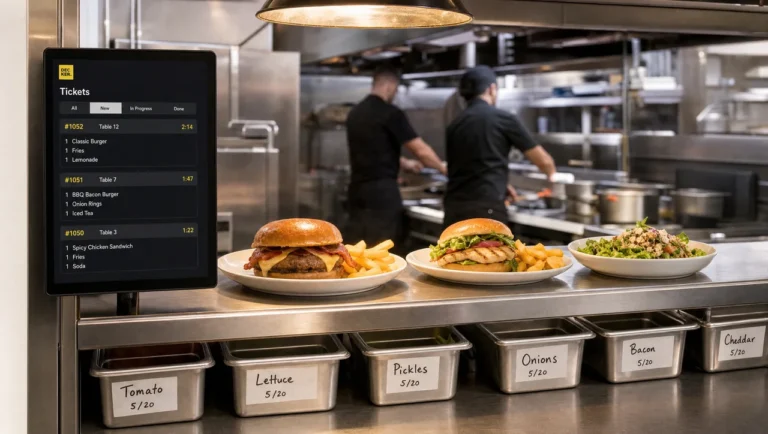
A catering menu changes far more often than your dining room menu does, and with a third of workplace orders landing inside 24 hours, the board in your restaurant should never advertise a dish the kitchen has committed to an event. Connecting your menu screens to the POS keeps the two in sync without anyone walking out front.
Next, group size rewrites both the dish list and the quantities.
Catering Menu Ideas for Large Groups
Next, scale changes the question. Crowd menus win on which dish still tastes good forty minutes into service, after fifty guests have worked down the line. Buffets also swallow roughly 20–25% more food than plated service, because guests build their own plates.
- Pulled pork with soft buns and two sauces, mild and hot
- Baked ziti or lasagna with meat sauce
- Chicken tinga or fajita trays for a build-your-own line
- Rice and beans with salsa, cheese, and lime
- Braised beef with root vegetables
- Italian sausage casserole with peppers and onions
- BBQ chicken quarters with slaw and cornbread
- Roasted seasonal vegetables in half pans
- Deli buffet with ham, turkey, salami, cheeses, breads, and condiments
- Sheet-pan desserts: brownies, blondies, apple crumble
These dishes share three traits: a sauce or braising liquid protects them from drying out on a hot line, portions hold their shape under a serving spoon, and the recipes scale in pans rather than on plates. A crowd order also competes with your dinner service for the same stations, so the prep list and station map you already use to run a restaurant kitchen decide how large an order you can accept. A theme helps here too, because the kitchen executes one rehearsed set instead of a dozen one-offs.
Catering Menu Ideas for Small Groups
In contrast, small groups run on the opposite logic. Parties of roughly 2 to 30 guests give you no line to manage and no pan to hide behind, so guests examine every plate. Hand work pays off here, and precise portions matter more than volume.
- Charcuterie board built with an S-curve of crackers and fruit running through it
- Arancini, fried to order
- Mini sirloin sliders with aged white cheddar
- Ahi tuna poke tacos
- Spinach and feta puffs
- Whipped ricotta with honey and grilled sourdough
- Stuffed mushrooms, prepped the day before
- Deviled eggs with crispy shallot
- Individual banoffee pots or lemon posset
- Sparkling mocktails with fresh garnish
Small orders also forgive the least on quantity, because guests notice a miss of two portions immediately. The portion numbers for grazing boards and passed bites are in the chart below.
Both group sizes run on the same arithmetic, so here are the numbers in one place.
Catering Portions Chart: How Much Food per Person
Specifically, catering portions start from two anchors: plan roughly 1 to 1.25 pounds of total food per adult for a plated dinner, and 0.5 to 0.75 pounds for a cocktail-style event. Menus with several mains pull each number down, because guests split their plates between dishes.
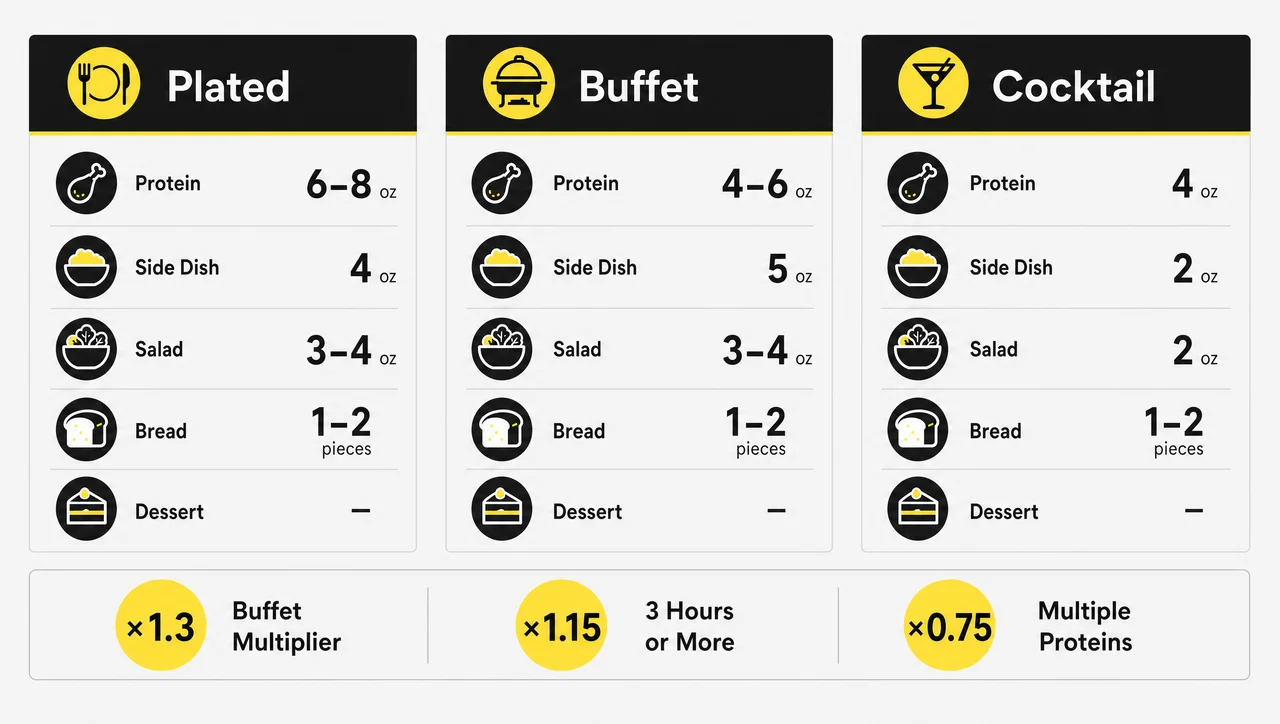
| Category | Plated | Buffet | Cocktail |
|---|---|---|---|
| Protein | 6–8 oz | 4–6 oz | 4 oz |
| Starch | 4 oz | 5 oz | 2 oz |
| Vegetable side | 4 oz | 4 oz | 2 oz |
| Salad | 3–4 oz | 3–4 oz | 2 oz |
| Bread | 1–2 pieces | 1–2 pieces | 1 piece |
| Dessert | 1 serving | 1.5 servings | 2 oz |
Formats with their own math
- Passed appetizers: 4–6 pieces per person per hour. A three-hour reception with no dinner means 12–18 pieces per guest.
- Grazing board or charcuterie: 3–4 oz of meat and cheese per person as an appetizer, 5–6 oz when it is the main spread.
- Family-style: 6–8 oz of protein and 4–5 oz of each side per person, plus a 20% buffer so the last table does not get scraps.
- Taco bar: 4–5 oz of protein and 1.5–2 tacos per guest.
Adjust for the room
| Situation | Multiplier |
|---|---|
| Buffet service | × 1.3 |
| Hearty appetites | × 1.2 |
| Light appetites (business lunch, seniors) | × 0.8 |
| Families with children | × 0.9 |
| Events over three hours | × 1.15 |
| Each additional protein option | × 0.75 |
Turning ounces into pans. A full-size steam table pan, about 12 by 20 inches and 4 inches deep, holds roughly 20–24 pounds of a main dish and yields 25–30 portions. That number tells you how many pans go in the van.
⚠️ Portion guides disagree, and it is worth knowing why before you trust one. Some put buffet protein at 4–6 oz per guest; others say 6–8 oz for boneless cuts and 10–12 oz for bone-in, because bone weight is not edible weight. The gap is also about choice: when you offer two mains, guests take less of each. Cost your own menu against your own leftovers rather than adopting someone else’s number.
Portions settle the quantity question. Specifically, the calendar settles the flavor one.
Seasonal and Cuisine-Themed Catering Menu Ideas
Seasonal menus cost less, taste better, and hand a repeat client a reason to book again. In addition, large group orders spike across the fall and holiday stretch: September, November, and December post the year’s biggest year-over-year growth, so build the seasonal set before the calls start.
Ideas by Season
- Spring: asparagus and pea salad with mint
- Spring: herb-forward grain salads
- Spring: strawberry shortcake with local berries
- Summer: grilled zucchini, corn, and bell pepper skewers
- Summer: chilled cucumber soup or gazpacho shots
- Summer: watermelon, peach, and berry platter
- Fall: butternut squash soup with brown butter
- Fall: cranberry and brie stuffed chicken
- Fall: roasted root vegetables with thyme
- Winter: braised short ribs
- Winter: citrus and fennel salad
- Winter: hot cider and cocoa station
Holiday catering menu ideas deserve their own set, because Thanksgiving and Christmas orders repeat every year: roast turkey with cranberry, glazed ham, herbed stuffing, and pie by the sheet.
Seasonal swaps also move your prices, which is the moment most kitchens discover how many places a price actually lives. There is more on that pattern in our guide to how seasons affect food service demand.
Themed Sets by Cuisine
Indian, soul food, deli, and seafood sets follow the same logic: one cuisine, one rehearsed line-up, one order sheet.
- Italian: antipasto salad, lasagna, Italian green beans
- Mexican: fajita bar with refried beans and Spanish rice
- Greek: make-your-own gyro with tzatziki and Greek salad
- Southern: pulled pork, baked beans with smoked ham, corn on the cob
- Mediterranean: falafel, hummus, tabbouleh, grilled halloumi
- Asian: noodle bowls with teriyaki chicken, tofu, or shrimp
A theme does real work for both sides. The client stops choosing between forty items, and your kitchen repeats one rehearsed set until it runs clean.
In addition to season and cuisine, two constraints shape every list: what guests cannot eat and what the client will pay.
Dietary and Budget Ideas
Dietary menus carry real risk: roughly 33 million Americans live with life-threatening food allergies. Health inspectors check labels, not intentions, so plan these options from the start rather than bolting them on when someone asks.
- Quinoa-stuffed bell peppers as a standalone vegan main
- Vegetable Wellington, plated like any other entrée
- Beetroot hummus platter with seed crackers
- Crispy buffalo cauliflower instead of wings
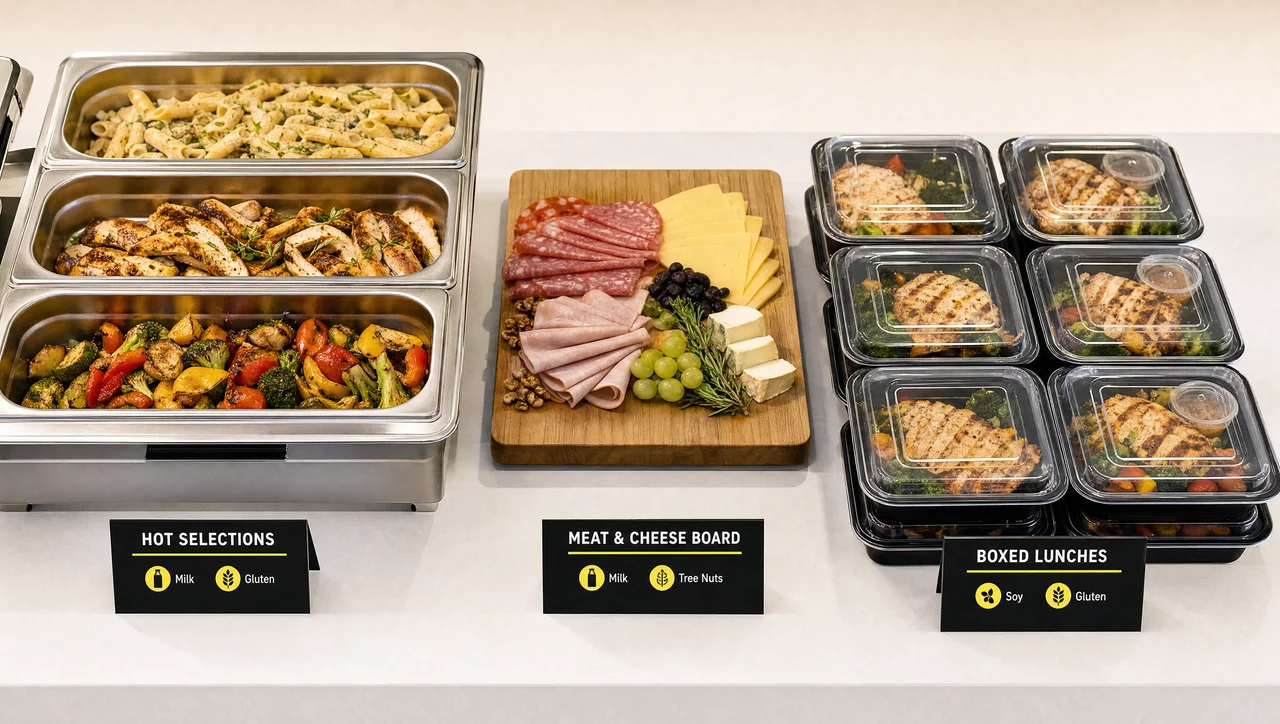
- Gluten-free pasta bake, labeled and served with its own utensil
- Nut-free pesto made with sunflower seeds
- Potato and chickpea curry, filling and inexpensive
- Seasonal fruit platter as an allergen-safe dessert
Easy, affordable catering menu ideas follow the same rules as the rest of the list: fewer components, shared prep, and dishes that repeat across formats. Two rules make these work. First, the alternative should read as a choice, not a consolation prize: a vegetable Wellington stands on its own where a plate of grilled vegetables does not. Second, label every dish with its allergens, and use a separate serving utensil for each, because allergen labels protect both the guest and your license.
On budget: plant-based mains usually cost less than meat-heavy ones, platters cost less to produce than individual servings, and chicken or pork keeps the price down where beef and seafood push it up. Buying staples in bulk can save 15–20% on those line items.
As a result, the menu is only half the answer. Pricing is the other half.
How to Create a Catering Menu in Five Steps
Overall, a catering menu comes together in the same order every time, whether you quote a birthday party, a corporate account, or creative catering menu ideas for private parties.
- Pick the format first. Buffet, plated, stations, or boxes decides staffing and cost before you choose a single dish.
- Choose 6–10 dishes your line already makes. Shared components mean shared prep.
- Cover the diets. One vegetarian, one vegan, one gluten-free item, all labeled.
- Set portions per person from the chart above, then add the buffer your format needs.
- Cost and price each package before you publish it, not after the client asks.
Sample catering menu for 50 guests, buffet-style
| Course | Dish | Portion per guest |
|---|---|---|
| Appetizer | Grazing board with cheeses, prosciutto, dried fruit | 3–4 oz |
| Main | Herb-roasted chicken breast with pan sauce | 5–6 oz |
| Main | Baked ziti with meat sauce | 5 oz |
| Side | Roasted seasonal vegetables | 4 oz |
| Side | Wild rice pilaf | 5 oz |
| Salad | Mixed greens with balsamic | 3 oz |
| Bread | Warm rolls with butter | 1–2 pieces |
| Dessert | Brownie and blondie tray | 1.5 servings |
This sample catering menu runs two mains on purpose: guests split between them, so each protein drops to roughly 5–6 oz instead of 8.
Catering Menu Pricing and Food Cost
As a result of all those service costs, catering menus target a 28–36% food cost, and well-run programs land at 25–30%. Those numbers sit above many dine-in targets for a simple reason: a catering price already covers service, transport, and setup, which restaurants never bill separately.
Cost every order in four steps
- Cost the food per person from actual purchase prices, not retail.
- Add 5–10% for trim, spoilage, and over-portioning, because nobody plates exactly to headcount.
- Add packaging: containers, lids, utensils, napkins, and labels run roughly $0.50–2.00 per person.
- Divide the total by your target food cost percentage.
Worked through: $4.50 of food plus $1.00 of packaging is $5.50 per person. At a 30% target, $5.50 ÷ 0.30 = $18.33, which you round to $18 or $19. Delivery gets priced separately or built in on top.
How you price catering services depends on the format: price per person for buffets, boxed lunches, and platter menus. For shareable formats, price per tray and state what it feeds, such as “serves 8–10”. Appetizers are commonly priced as a share of the per-person menu cost rather than costed in isolation.
⚠️ Markup and margin are not the same thing, and the difference is expensive. If your loaded cost is $32 per guest and you add 35% ($32 × 1.35 = $43.20), you have earned about 26%, not 35%. To actually hit a 35% margin, divide: $32 ÷ (1 − 0.35) = $49.23.
A healthy catering profit margin lands at 55–65% gross and 10–15% net. Anything lower usually means you skipped labor or delivery when you priced the order.
A priced menu still has to leave the building safely. Therefore the last step is logistics.
Getting Catering Out the Door
The FDA Food Code governs the last mile, and transport ranks as the highest-risk phase of any catering order: every control your kitchen relies on weakens the moment food leaves the building. Therefore treat loading as a checkpoint, not a formality.
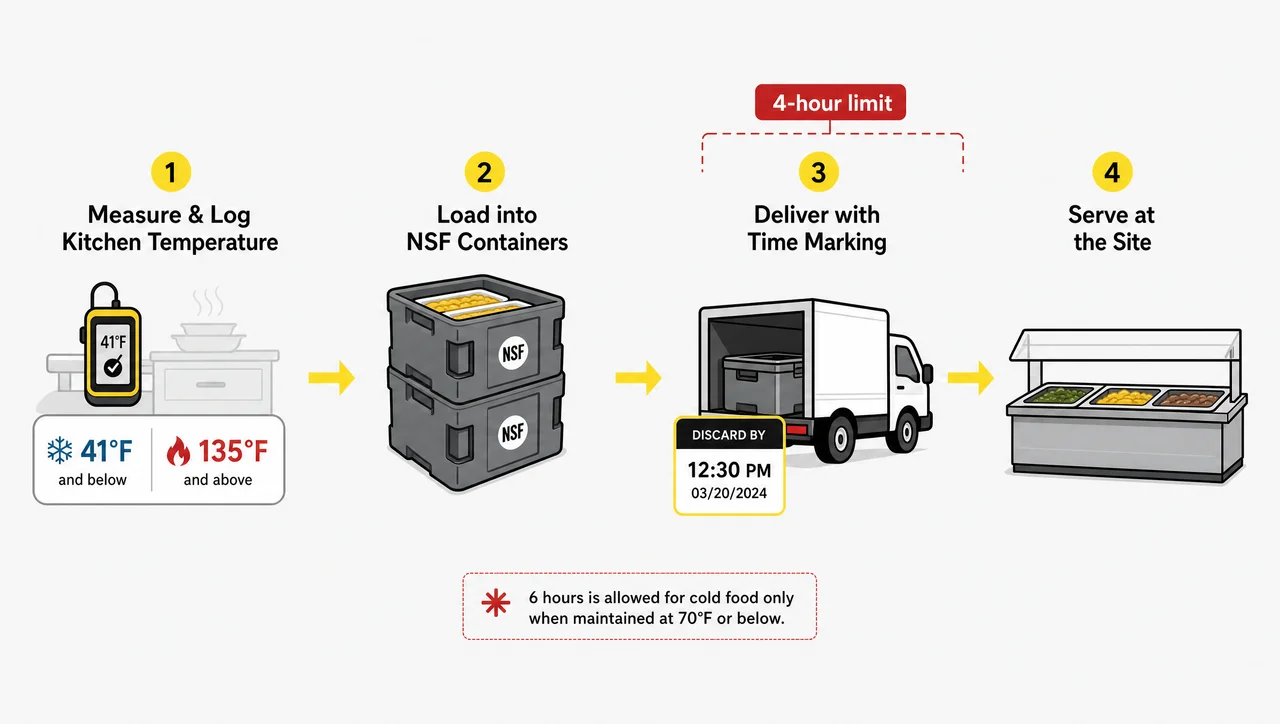
- Temp and record before loading. Cold items at 41°F or below, hot items at 135°F or above. Food sitting between those numbers should not leave the kitchen at all.
- Use equipment that holds. The Food Code expects NSF-compliant transport containers that hold 41°F or 135°F, not a picnic cooler.
- Know the four-hour rule. If you hold food using time instead of temperature control, it starts at 41°F or below (or 135°F or above), gets marked with its discard time, and is thrown out after four hours. Food held on time cannot go back under temperature control.
- Cold gets a six-hour option. Cold items may run six hours if they start at 41°F or below and never exceed 70°F.
- Reheat properly. Food reheated for hot holding must reach 165°F for 15 seconds within two hours, and a steam table cannot reheat food, because it only holds temperature.
Keeping the catering menu and the dining room in sync. Catering menus move faster than dining room menus: seasonal sets change, event pricing changes, and short-notice orders eat into prep for the evening service. When an item is committed to an event or sells out, the board your walk-in guests are reading should reflect it. With Decker, an item marked unavailable in the POS drops off the screen on its own, a price change reaches the display in about 1–5 seconds, and display rules can run a catering block on its own schedule beside the regular menu. If you are building the board itself, start from the catering menu templates, or see how the same screens work across the rest of the room in digital signage for restaurants.
Overall, catering menu ideas work when the dish, the portion, the price, and the transport plan agree with each other.
Questions and Answers
1 What should be on a catering menu?
A workable catering menu covers appetizers, one or two mains, two sides, a salad, bread, and a dessert, with at least one vegetarian and one gluten-free option built in. Keep the list short enough that your kitchen can produce all of it at volume on the same morning.
2 How much food do I need per person for catering?
Catering portions start at roughly 1 to 1.25 pounds of total food per adult for a full meal, with 6–8 oz of protein plated or 4–6 oz on a buffet, plus 4–6 oz of each side. For cocktail events, plan 4–6 pieces per person per hour.
3 What are the cheapest catering menu ideas?
Catering menu ideas that cost least: pasta bakes, rice and beans, potato bars, sandwich and wrap platters, and sheet-pan desserts. Platters cost less to produce than individual servings, and chicken or pork keeps the protein line down.
4 How do you price a catering menu?
Catering menu pricing works backwards from cost: add food cost, a 5–10% waste allowance, and packaging, then divide by your target food cost percentage. Price per person for buffets and boxed lunches, and per tray for shareable items, stating how many people each tray serves.
5 What food works best for a crowd of 50 or more?
Dishes that hold on a hot line: pulled pork, baked pasta, fajita or tinga trays, braised beef, BBQ chicken, and roasted vegetables in pans, finished with sheet-pan desserts.
6 What works for a party of 20 guests?
Hand-finished items that look intentional: a grazing board, arancini, mini sliders, poke tacos, spinach and feta puffs, and desserts in individual jars.
7 How much does catering cost per person?
It depends on guest count, menu type, service level, location, and event timing, which is why quotes range widely. Work back from your own costs rather than a published average: your loaded cost divided by (1 − your target margin) is the price that actually pays you.
8 How far in advance should catering be booked?
Weddings and large events are usually booked months ahead, while corporate orders often come in a few weeks out. Plan for short notice too, since about 30% of workplace orders arrive with less than a day’s warning.
9 What catering menu ideas work for a wedding?
Passed appetizers during cocktail hour, then either a buffet with two proteins or food stations that keep guests moving. A late-night station is the add-on couples remember.