How Much Is a Food Truck License in 2026? What Each Permit and Inspection Really Adds Up To


A food truck permit costs about $100 to $2,000 a year, but no truck operates on a single permit. The full stack of licenses, inspections and local fees ran from $590 in Indianapolis to $17,066 in Boston in the first year, and the average across major U.S. cities was about $1,864.
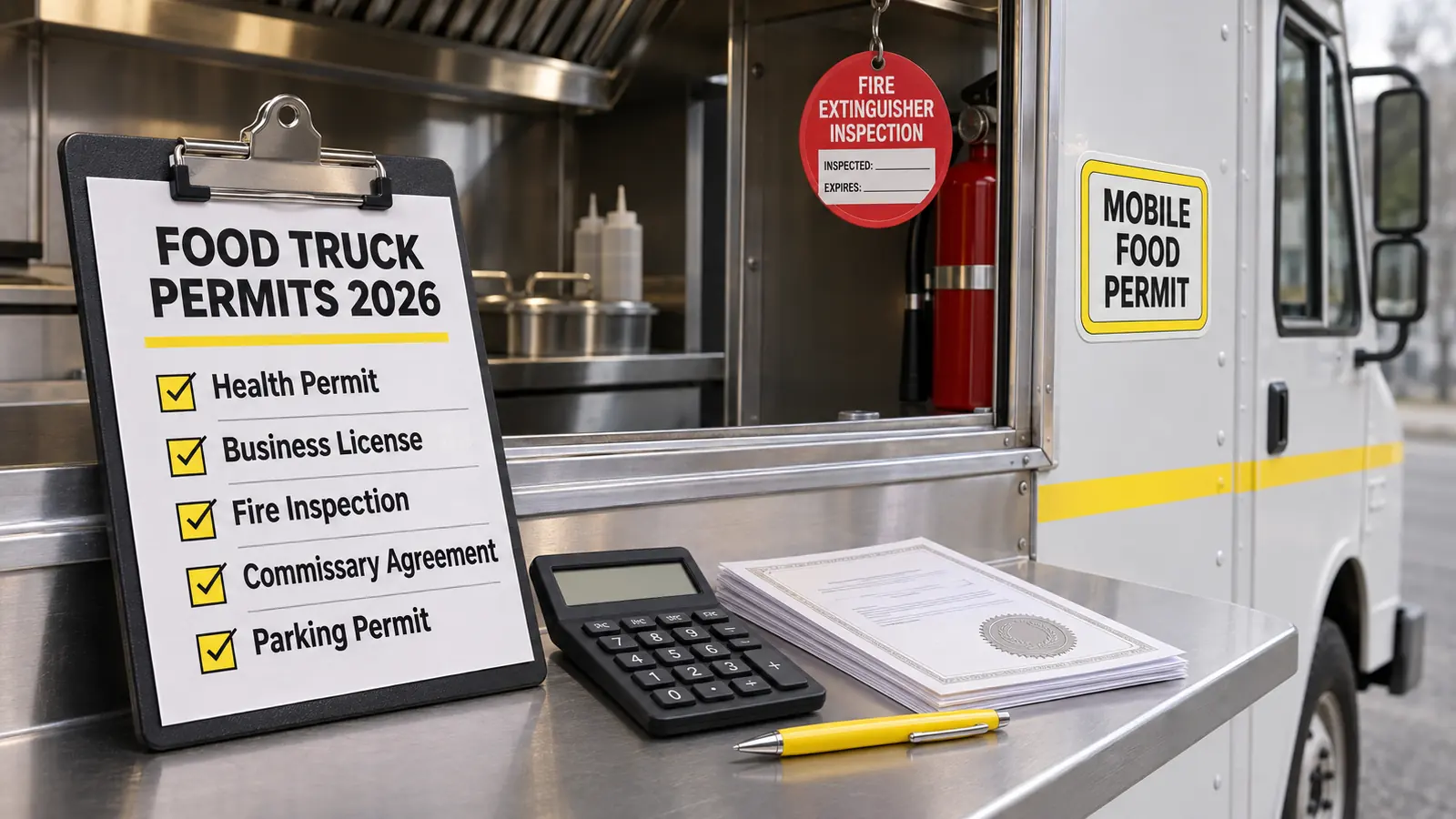
Two numbers decide your budget: the fee your state or county publishes for the mobile food permit, and the local add-ons that land on top of it. This guide prices food truck permits one by one, then shows how the totals change in Texas, Florida, New York City, California, Arizona and Colorado after the 2026 rule changes.
How Much Does a Food Truck Permit Cost in 2026?
A food truck permit runs from under $100 a year for a prepackaged cart in New York City to $1,376 for a cook-on-board truck in Texas, according to current official fee schedules. Most operators land in the middle: $300 to $900 a year for the health-department permit, plus a business license, fire inspection and commissary.
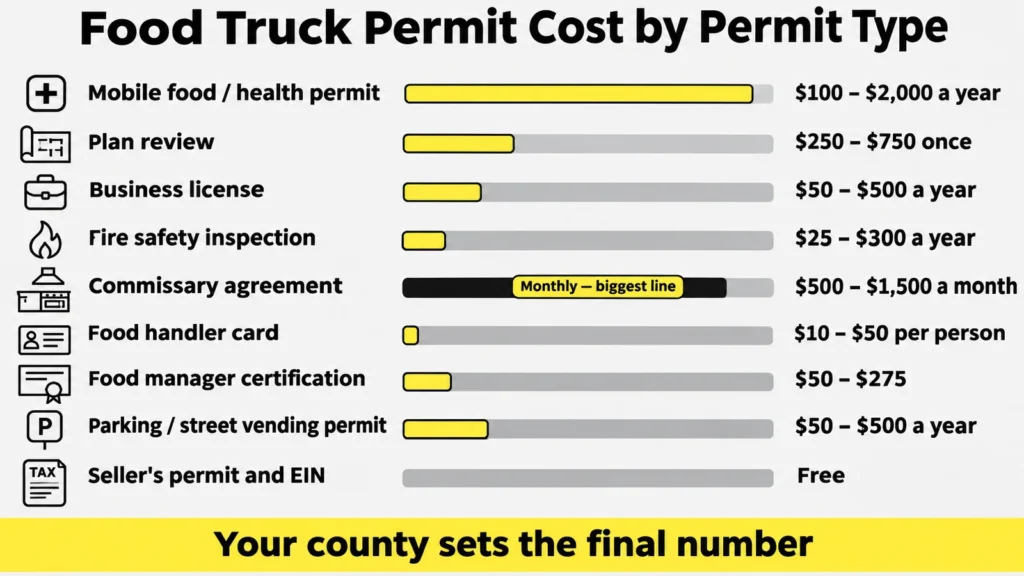
Food truck permits also require a stack of smaller approvals, listed below with what a typical truck pays in year one. Ranges reflect published fee schedules and the spread across jurisdictions; your county sets the final number.
| Permit or license | Issued by | Typical cost | One-time or recurring |
|---|---|---|---|
| Mobile food vendor / health permit | County or state health department | $100 – $2,000 a year | Annual (NYC: every 2 years) |
| Plan review (truck build check) | County health department | $250 – $750, once | One-time, repeats if you rebuild |
| Business license | City or county clerk | $50 – $500 a year | Annual |
| Fire safety inspection or permit | City fire department / fire marshal | $25 – $300 a year | Annual |
| Commissary agreement | Licensed commercial kitchen | $500 – $1,500 a month | Monthly |
| Food handler card | State-approved training provider | $10 – $50 per person | Every 2–5 years |
| Food manager certification | Accredited exam provider | $50 – $275 | Every 5 years |
| Parking or street vending permit | City parking or transportation office | $50 – $500 a year | Annual, where required |
| Vehicle registration | State DMV | Varies by state and vehicle weight | Annual |
| Seller’s permit / sales tax ID | State tax agency | Usually free | One-time |
| EIN | IRS | Free | One-time |
State Fee vs. What You Actually Pay
The state or county figure for food truck permits covers one line of the bill. Food truck permits in most cities cost more because the city total adds plan review, fire, parking, the commissary and, in states without a statewide permit, a separate permit for every city you serve. That gap explains why Massachusetts publishes a modest state food permit while a Boston operator pays five figures in the first year.
Typical Licensing Budget for Year One
In most major cities, government fees alone total about $590 to $2,000 in year one; high-cost cities run several times higher. Add 12 months of commissary rent and the licensing-related budget climbs to roughly $6,600 to $24,000. Insurance is a separate line and is not included here.
| Scenario | Government fees, year one | With commissary (12 months) |
|---|---|---|
| Low-cost city, one county (e.g., Indianapolis) | about $590 | about $6,600 – $18,600 |
| Major-city average | about $1,864 | about $7,900 – $19,900 |
| High-cost city (e.g., Seattle) | about $6,211 | about $12,200 – $24,200 |
Totals are an example built from the $500 to $1,500 monthly commissary range; your lease sets the real number.
Next, the documents behind those totals, level by level.
What Licenses and Permits Does a Food Truck Need?
In 2026, most trucks need four to seven separate food truck licenses and permits from the IRS, the state, the county health department and city offices before the first sale. Each approval covers a different risk: the business license registers the company, the health permit protects customers, and the fire permit covers propane and cooking equipment.
The FDA Food Code is the model most state and county food rules follow, so food truck licenses follow the same pattern nationwide while the fees differ widely.
| Level | Document | Who issues it |
|---|---|---|
| Federal | EIN (Employer Identification Number) | IRS |
| State | Seller’s permit / sales tax registration; state food license where one exists | State tax agency; state health or business-regulation agency |
| County | Mobile food permit (health permit) and plan review | County health department |
| City | Business license, fire permit, vending or parking permit | City clerk, fire department, transportation office |
| Staff | Food handler cards; one certified food manager | Approved training and exam providers |
Don’t confuse: a food truck business license with a food permit. The business license lets the company trade in a city; it does not authorize you to sell food. Food sales require the mobile food permit from the health authority.
Next comes the permit that drives most of the bill: the mobile food permit from the health department.
Mobile Food Vendor License and Health Permit Costs
The mobile food vendor license, also called a mobile food facility (MFF) or mobile food unit (MFU) permit, is the county health department sign-off for selling food from a vehicle, and it usually costs $100 to $2,000 a year. A food truck permit of this kind costs the most and swings the most from county to county; it is the line most people mean when they ask about price.
One Permit, Many Names: MFF, MFU and Mobile Food Vendor License
Food truck permits appear under different names depending on the state. California counties use mobile food facility (MFF), Washington uses mobile food unit (MFU), Arizona’s Maricopa County uses mobile food establishment, Florida licenses a mobile food dispensing vehicle (MFDV), and New York City issues a mobile food vending unit permit. The name changes; the function is the same.
Health Permit Fees by Risk Tier
Counties price food truck permits by how risky your menu is. Food truck permits for taco or BBQ trucks cost more than permits for prepackaged ice cream, because more raw protein and more cooking on board mean a higher tier. Plan the menu, and the food truck menu board that shows it, around the tier you pay for.
| Jurisdiction | Lowest tier | Highest tier | Basis |
|---|---|---|---|
| Los Angeles County, CA | $325 a year (low risk, e.g., prepackaged ice cream) | $598 a year for moderate risk; more for high-risk trucks such as taco trucks | Menu risk |
| Maricopa County, AZ | $290 a year (Type I, prepackaged) | $610 a year (Type III) | Level of food preparation |
| New York City | $75 per 2 years (prepackaged) | $200 per 2 years (food prepared on board) | Preparation on site |
| San Francisco, CA | — | $893 a year (mobile food facility license after the 2026 increase) | Facility class |
King County, Washington, uses three risk levels: Risk 1 covers espresso and commercially prepared hot dogs with no on-site cooking, while cooking, hot holding, cooling and reheating move a truck into a higher level.
Plan Review: The Fee Before You Open
Plan review is a one-time fee charged before the first inspection to check that the truck build meets the code. In Los Angeles County, plan check for a high-risk mobile food facility costs $741 and for a mobile support unit $441. Maricopa County charges $306 for a Type II plan review and $300 for Type III. San Francisco bills plan check at $251 an hour.
Each initial plan check in Los Angeles County covers two plan reviews and two field inspections; extra rounds cost more. A truck built without checking the local spec sheet pays that fee again.
Commissary Agreement: $500 to $1,500 a Month
Most counties will not issue a health permit until you show a signed agreement with a licensed commissary, the commercial kitchen where you prep food, fill water and dump waste. A food truck permit usually depends on that agreement; monthly rent runs $500 to $1,500 and goes higher in Manhattan. Over a year, the commissary often costs more than every government fee combined.
Important: health inspectors can ask for commissary receipts during inspection. No receipts usually means no permit.
On top of the health permit, every truck also needs the business registrations covered next.
Food Truck Business License, LLC and Tax IDs
A food truck business license costs $50 to $500 a year from the city or county clerk, while the IRS issues your EIN for free. Get it early: the mobile food permit application often asks for the license number.
Business License Fees: $50 to $500 a Year
The business license is the base registration that lets your company trade in a city. Some states leave it entirely to counties and cities, so a truck that works in three cities may hold three sets of food truck licenses. New York has no statewide general business license; New York City licenses businesses through its Department of Consumer and Worker Protection.
Do You Need an LLC for a Food Truck?
No state requires an LLC to run a food truck; a sole proprietorship can hold every permit on this list. Many owners form an LLC anyway to separate personal assets from business debts and claims. State LLC filing fees range from about $35 to $500. New York charges $200 plus a publication requirement that can exceed $1,000 in the New York City area.
Seller’s Permit and EIN: Free
The EIN is your federal tax ID, and the IRS issues it free online. Most states also register you for sales tax at no charge. Services that charge to file either form are charging for paperwork you can submit yourself in minutes.
❌ You have to pay a filing service to get an EIN. The IRS never charges for an EIN; any fee goes to the third-party site, not the government.
Beyond company paperwork, the food license itself also requires trained staff, which is where food service costs come in.
How Much Is a Food Service License?
A food service license for a truck usually means the county health department permit, plus personnel certifications that cost $10 to $275 per person. Restaurants pay a food service establishment license; trucks pay the mobile version of the same approval.
State Food Service License vs. Local Health Permit
In most states the county health department issues the food license. A few states license centrally: Florida’s Division of Hotels and Restaurants licenses every mobile food dispensing vehicle, and Texas moved trucks to a single state health permit in July 2026. In New York State, food service establishment permits come from county health departments outside the city and from the NYC Health Department inside the five boroughs.
Food Handler Card: $10 to $50 per Person
Anyone who touches food needs a food handler card in most states. Online courses typically cost $10 to $50 and stay valid for two to five years, depending on the state. It is the only item on the list you can finish in one afternoon.
Food Manager Certification Cost
Most health codes require at least one certified food protection manager on staff. Accredited exams typically cost $50 to $275 and stay valid for five years. New York City requires its own Food Protection Course for Mobile Food Vendors, which costs $53, before it issues a vending license.
Temporary Event Food Permits
Festivals and markets outside your home county usually require a temporary event permit on top of your annual permit. In Maricopa County, a temporary food establishment permit valid for 14 days costs $249. If the event runs a shorter menu, digital menu software can schedule it for those dates and switch back afterward.
Food Truck Inspection Cost: Health and Fire Safety
A food truck inspection typically costs $25 to $300 for the city fire check, while the county health department either bundles its inspection into the permit fee or bills up to $500 per visit. Texas, for example, charges a separate pre-licensing inspection fee under its new state permit.
Health Inspection
The health department inspects the truck before the permit is issued and then on a routine schedule. In Los Angeles County, every mobile food facility needs an annual certification inspection, and missing the certification sticker can lead to suspension of the permit. New York City requires every mobile food vending unit to pass inspection within six months of the application date.
What inspectors check:
- Fresh-water and wastewater tank capacity
- Hand sink placement and hot water
- Three-compartment sink for washing utensils
- Refrigeration and hot-holding temperatures
- Commissary agreement and receipts
Fire Marshal Inspection: Propane and Fire Suppression
Any truck with propane, deep fryers or open flame needs a fire inspection, which typically costs $25 to $300. The fire marshal checks propane tanks and lines, the hood and fire-suppression system, and extinguishers. In New York City, the FDNY certifies trucks with mounted propane systems. Ask whether your county schedules the health and fire visits together; some do.
Re-Inspection Fees
A failed inspection usually means a paid re-inspection. Many counties charge $100 or more per extra visit, and plan-review counties also charge to review corrected drawings. Building to the local spec sheet the first time is the cheapest way to avoid both.
Food Truck Parking Permit Cost
In 2026, a food truck parking or street vending permit typically costs $50 to $500 a year where a city requires one, but many trucks pay more in private lot and event fees than in permit fees. Parking rules come from the city, not the health department, so food truck permits from the health department do not tell you where you may park.
City Street Vending and Parking Permits
Cities that allow curbside vending often sell a separate street vending or right-of-way permit, issued by the parking or transportation office. Some cities also set no-vending zones near restaurants, schools or downtown cores. Boston allocates many public vending spots through a competitive process, one reason its first-year total tops every other major city.
Private Lots, Markets and Event Fees
On private property you need the owner’s written permission, and many cities also require a zoning approval for the site. Curated markets and festivals charge vendor fees per day or a share of sales; popular weekend markets in New York City charge $300 to $800 per day.
Overnight and Commissary Parking
Most counties require the truck to return to its commissary or an approved base after service. In dense cities, overnight storage can run $300 to $600 a month on top of the commissary agreement.
Food Truck License Costs by State and City
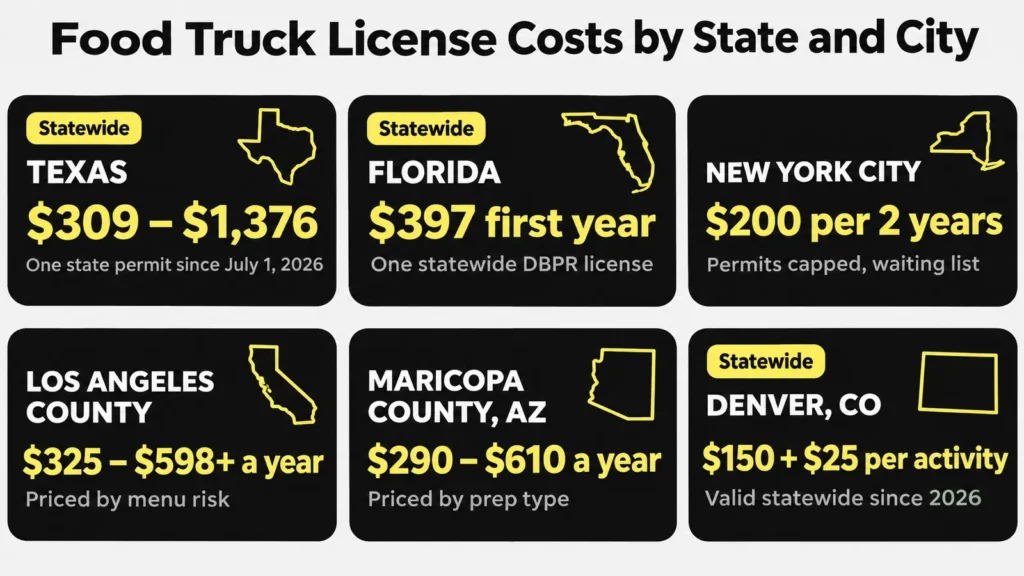
Food truck license costs depend more on the city than on the state: first-year permit and license fees range from about $590 in Indianapolis to $17,066 in Boston, according to Square’s analysis of the U.S. Chamber of Commerce Foundation Food Truck Index.
| City | First-year permit and license fees | What drives the cost |
|---|---|---|
| Denver, CO | about $580 | Simple city-county license, now valid statewide |
| Indianapolis, IN | about $590 | Lowest of the major cities |
| Average, major cities | about $1,864 | Boston excluded as an outlier |
| Seattle, WA | about $6,211 | County risk-based permit plus plan review and city fees |
| San Francisco, CA | about $10,000+ | Higher city license fees and hourly plan check |
| Boston, MA | about $17,066 | Competitive public vending spots and site fees |
Texas: The New Statewide Food Truck Permit
Since July 1, 2026, Texas trucks need one state health permit from the Texas Department of State Health Services (DSHS) instead of a permit from every city. House Bill 2844 created three license tiers based on how a truck prepares food, from prepackaged foods to full cooking on board.
The state permit now costs $309 to $1,376 once required inspections are added, according to the DSHS Mobile Food Vendor Guide. A coffee truck, for example, pays a $618 application fee plus a $400 pre-licensing inspection, $1,018 in total. DSHS expects to license about 19,000 trucks.
What it replaced: Dallas charged a new truck a $481 application fee, a $562 plan review and $185 for the annual permit, while Amarillo charged $800 to $900. One operator working several cities reported paying about $3,000 a year in permit fees.
❌ The statewide permit ends all city rules in Texas. HB 2844 covers the health permit and inspections only; cities still control zoning, fire inspections, parking and where trucks may operate.
Florida: One Statewide License
Florida licenses food trucks centrally through the Department of Business and Professional Regulation (DBPR), Division of Hotels and Restaurants, which issues the mobile food dispensing vehicle (MFDV) license. Florida Statute 509.102 bars cities and counties from requiring any other license, registration or permit fee for the truck, and from banning trucks across their whole jurisdiction.
The license costs $347 a year plus a $50 application fee, about $397 in the first year. DBPR inspects the finished vehicle before it issues the license. Trucks that sell only whole produce or prepackaged food fall under the Department of Agriculture and Consumer Services instead.
New York City: Mobile Food Vending Permit Cost
New York City charges $200 for a two-year mobile food vending unit permit when food is prepared on board, $75 for prepackaged food, and $35 for a seasonal permit valid April 1 through October 31. Each person who works the truck also needs a $50 two-year Mobile Food Vending License; honorably discharged veterans pay no license fee.
The fees are low; access is the problem. The city caps full-term citywide permits at about 2,900, and new full-term permits now go only to applicants with a supervisory license under Local Law 18 of 2021, who are drawn from the waiting list. Operators without a permit have historically leased one from a holder for $15,000 to $25,000 a year.
❌ A New York City food truck permit costs $200. The legal fee is $200 for two years, but the cap and waiting list mean most new operators either wait years, lease a permit, or use a restricted-area permit for private property.
Outside the five boroughs, county health departments issue mobile food permits under 10 NYCRR Subpart 14-4, and most upstate cities add a vendor license of roughly $100 to $500 a year.
California: County Permits by Risk Tier
California sets mobile food fees at the county level. Los Angeles County charges $325 a year for a low-risk mobile food facility and $598 for moderate risk, with high-risk trucks paying more. Its Public Health department covers the whole county except Long Beach, Pasadena and Vernon, which run their own programs.
San Francisco raised its mobile food facility license from $195 to $893 a year and bills plan check at $251 an hour. Many California cities also require their own business license and vending permit on top of the county health permit.
Arizona: Maricopa County Mobile Food Permits
Maricopa County prices its mobile food establishment permit by type: $290 a year for Type I (prepackaged foods and non-perishable drinks), $341 for Type II (limited preparation) and $610 for Type III. Plan review adds about $300, and adding a permit for a new owner or an additional unit costs $385.
Cities can add their own layer: Phoenix, Mesa and Gilbert each issue a mobile vendor license on top of the county permit.
Colorado: Mobile Food Vendor License
Colorado now lets one license travel. Since January 1, 2026, a Denver mobile food license is valid in every Colorado jurisdiction, and a state-issued mobile license works in Denver if you file it with the city at least 14 days before operating there.
Denver charges a $150 application fee plus a license fee built by adding $25 for each food-processing activity on the truck. Operators elsewhere in the state apply through their county health agency or the Colorado Department of Public Health and Environment.
Other States at a Glance
| State | Who issues the mobile food permit | Statewide or local | Note |
|---|---|---|---|
| Georgia | County boards of health under the Department of Public Health | Local | Atlanta runs a separate Street Eats vending program |
| Illinois | Local health departments | Local | Chicago adds its own city license |
| Pennsylvania | Department of Agriculture or a local health department | Mixed | Philadelphia and Allegheny County run their own programs |
| Washington | County health jurisdictions | Local | King County prices by risk level 1–3 |
| Massachusetts | Local boards of health | Local | Boston has the highest first-year total |
| Michigan | Local health departments | Local | Fees differ for mobile units with and without food prep |
| Ohio | Local health districts | Local | Larger cities add vendor licenses |
| New Jersey | Local health departments | Local | Municipal vendor licenses are common |
Mobile food licenses in these states are local, so check your county health department for the current fee; schedules change every year.
Low published fees can still mislead, however, when the permit class does not fit how you operate.
When the Cheapest Permit Is the Wrong One
A lower-priced permit, such as the NYC DOHMH $35 seasonal permit or Maricopa County’s $290 Type I permit, saves money only when its conditions match how you operate. Food truck permits sold as cheaper classes cost more in the end in four common cases:
- Seasonal instead of full-term. New York City’s $35 seasonal permit covers April 1 to October 31 only. If you plan to sell from November through March, you need the full-term permit.
- Prepackaged class with a cooking menu. A prepackaged permit ($75 per two years in New York City, $290 a year for Maricopa Type I) does not allow cooking or assembling food on board. Add one cooked item and you need the higher class ($200 or $610) and possibly a new plan review. Until it is approved, digital menu board POS sync keeps cooked items off the screen and the register at the same time.
- Restricted-area permit to skip the waitlist. New York City’s restricted-area permit has no cap, but it covers only private property with a written lease. It does not allow street vending.
- Texas statewide permit for a truck that never leaves town. A single-city coffee truck in Austin went from a local permit to $1,018 in state fees in 2026. The state permit pays off when you serve several cities; for one fixed location it can cost more than the old local permit.
Beyond picking the right class, the next costs to plan for are renewals and penalties.
Renewal Fees, Hidden Costs and Common Mistakes
In 2026, every county health department charges renewal fees, and outside Florida, Texas and Colorado each extra city adds its own permit, so the bill keeps recurring after year one. The fixes are cheap: a renewal calendar, a build that matches the local spec sheet, and a permit plan for every city you serve.
Annual Renewals and Late Penalties
Most health permits renew every year; New York City renews every two years. Counties charge late fees once the renewal date passes, and some charge a percentage of the annual fee that grows the longer the permit stays unpaid. Put every renewal date on a calendar as soon as each permit arrives.
Operating in Multiple Cities or Counties
Outside Florida, Texas and Colorado, a permit usually covers one county or city. A festival two counties away typically needs a temporary event permit, and serving a second city often means a second business license and vending permit.
What Happens If You Sell Without a Permit
Selling food without a valid permit can lead to fines, a closure order and, in some cities, impoundment of the truck or cart. New York City prohibits selling food from any unit without a valid permit decal, even if every worker holds a vending license. In New York City, Health Code violations or unpaid fines can lead to revocation of the vending license.
Food Truck Liquor License: Rules and Cost
Most states do not issue a standard liquor license to a moving vehicle. Operators who want to sell alcohol usually work through a catering license, a special event permit, or a partner venue that holds the license. Rules and fees come from the state alcohol agency, such as the New York State Liquor Authority, so check that agency before you plan a bar menu.
Common Reasons Permits Get Denied
Health departments most often reject or delay applications for:
- A truck build that does not match the local spec sheet (tank sizes, sinks, ventilation)
- A missing or unsigned commissary agreement
- Incomplete plan review submissions
- A failed fire inspection of propane or suppression equipment
- Missing food manager certification
With those traps in mind, the next step is the filing order itself.
How to Get a Food Truck Permit
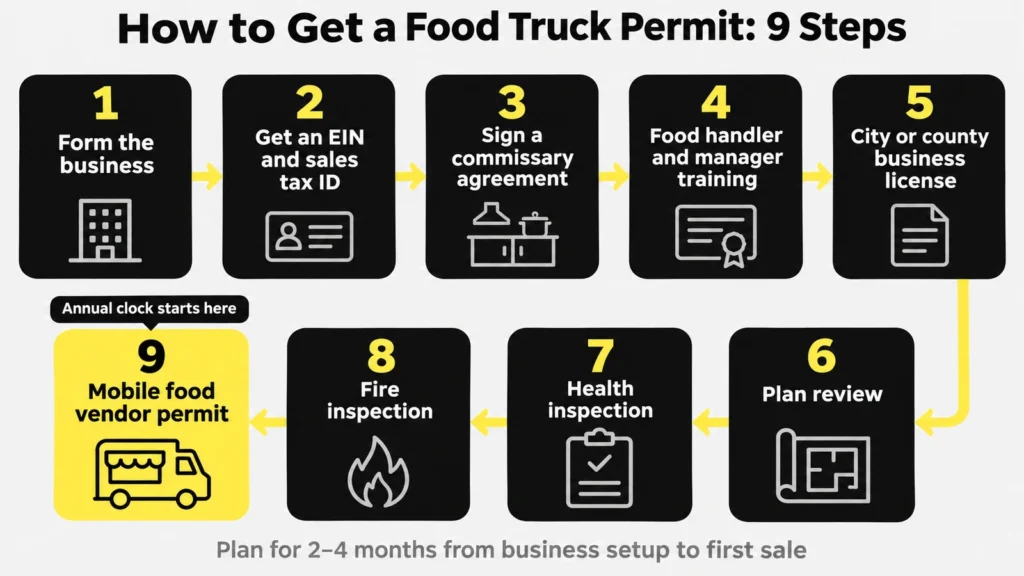
Apply in nine steps that protect your one-year clocks: business setup and the IRS EIN first, the county health permit and the mobile food vendor permit last. Food truck permits usually start their annual term on the day they are issued, so a health permit approved months before opening loses value while the truck sits idle.
| Step | Action | Typical cost | Typical time |
|---|---|---|---|
| 1 | Form the business (LLC or sole proprietorship) | $0 – $500 | 1–2 weeks |
| 2 | Get an EIN and register for sales tax | Free | Same day |
| 3 | Sign a commissary agreement | $500 – $1,500 a month | 2–6 weeks to find space |
| 4 | Complete food handler and food manager training | $10 – $275 per person | 1–7 days |
| 5 | Apply for the city or county business license | $50 – $500 | 2–4 weeks |
| 6 | Submit plan review, if your county requires it | $250 – $750 | 2–6 weeks |
| 7 | Pass the health inspection | Included or up to $500 | After the build is finished |
| 8 | Pass the fire inspection | $25 – $300 | Often the same week |
| 9 | Receive the mobile food vendor permit | $100 – $2,000 a year | The final approval |
How Long the Permit Process Takes
Most first-time operators should plan for two to four months from forming the business to the first sale. Florida and Texas, with statewide licensing, tend to move faster. Large cities such as Los Angeles, San Francisco and Chicago often take longer, and New York City can take years for a full-term permit because of the waiting list. Fit that timeline into the full plan for starting a food truck business, so the truck build and the permits finish together.
Fees change, often at the start of a fiscal year, so confirm the current amount with your county health department before you pay. This guide is general information, not legal advice.
Questions and Answers
1 How much is a food truck permit?
A food truck permit from a county or state health department costs about $100 to $2,000 a year. Current published schedules include $290–$610 in Maricopa County, $325–$598 for low and moderate risk in Los Angeles County, and $309–$1,376 for the Texas state permit with inspections.
2 Do I need an LLC to run a food truck?
No. A sole proprietor can hold every license and permit on this list. An LLC is optional and mainly protects personal assets; state filing fees run about $35 to $500.
3 How much does a food truck license cost in Florida?
The DBPR mobile food dispensing vehicle license costs $347 a year plus a $50 application fee. State law bars Florida cities and counties from charging their own license fee for trucks.
4 How much does it cost to get a food truck license in Texas?
The statewide DSHS permit costs $309 to $1,376 depending on how your truck prepares food and which inspections apply. It replaced city health permits on July 1, 2026.
5 How much is a food truck permit in NYC?
The city fee is $200 for two years for a truck that prepares food, plus a $50 two-year license per worker. Because permits are capped, the real cost has often been a lease of $15,000 to $25,000 a year.
6 What is the difference between a food truck license and a permit?
A business license makes the company legal to trade in a city. The mobile food permit, issued by the health authority, approves the truck and menu for food sales. You need both, from different offices.
7 Why is my local quote higher than the state fee?
The state figure covers only the food permit. Plan review, fire inspection, parking, city business licenses and commissary rent are local costs that sit on top of it.
8 Does one permit cover multiple cities?
Only in a few states. Florida’s MFDV license and the Texas state permit work statewide, and a Denver license is valid across Colorado. Elsewhere, expect a separate permit or event permit for each county or city.
9 Where can I legally park my food truck to sell?
Wherever the city’s vending rules allow it: designated street spots with a vending permit, or private property with the owner’s written permission and any required zoning approval. Overnight, the truck usually returns to its commissary.
10 Can I run a food truck out of my yard?
Usually not as your base. Most health codes require a licensed commissary for prep, water and waste, and residential zoning often bans commercial vending from a home.
11 Can a food truck get a liquor license?
Rarely as a standard license. Most operators sell alcohol through a catering license, a special event permit or a partner venue, under the rules of the state alcohol agency.
12 How long does it take to get a food truck permit?
Plan for two to four months from forming the business to opening. Statewide systems in Florida and Texas are faster; large cities take longer, and a full-term New York City permit can take years.
Sources
- Texas Department of State Health Services: Mobile Food Vendor Guide and HB 2844 program
- Florida DBPR, Division of Hotels and Restaurants; Florida Statute 509.102
- NYC Department of Health and Mental Hygiene; NYC Business: Mobile Food Vending License and Unit Permit
- Los Angeles County Department of Public Health: Mobile Food Facilities Fee Schedule
- San Francisco Board of Supervisors: mobile food fee ordinance
- Maricopa County Environmental Services: Fee Summary ES-2025-004
- City and County of Denver: Retail Food Mobile License and reciprocal licensing; Colorado Department of Public Health and Environment
- Public Health – Seattle & King County: permit risk levels
- IRS: Employer Identification Number
- Square / U.S. Chamber of Commerce Foundation Food Truck Index: first-year city totals